The straw went to the Iowa Division of Criminal Investigation lab. The report came back with careful wording: the DNA on the straw could not be eliminated as a match to the man’s DNA on Michelle’s dress.
That was enough for a search warrant to swab Burns’s mouth directly.
“Test the DNA”
On December 19, 2018, 39 years to the day after Michelle was killed, Investigator Denlinger walked into Jerry Burns’s office in Manchester.
He set a camera running. It was hidden inside a coffee mug.
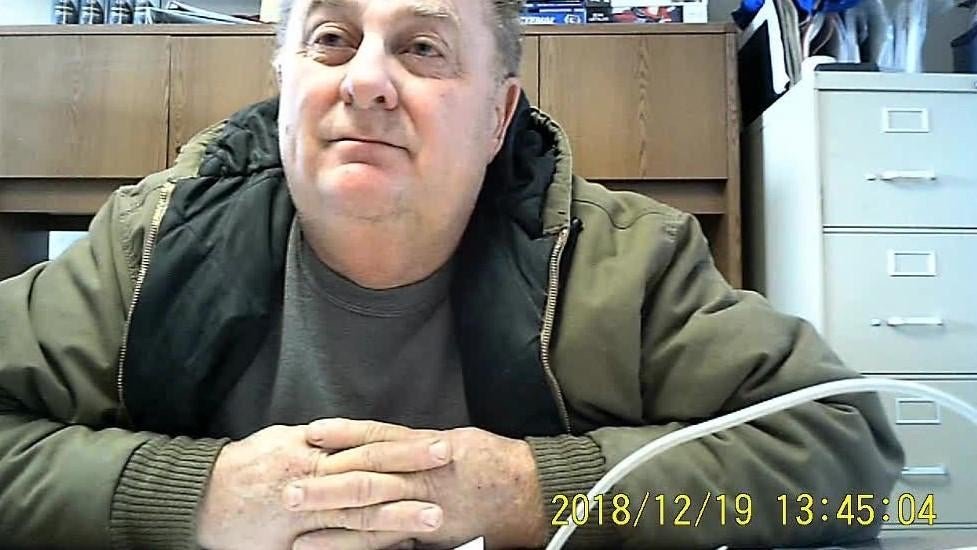
Denlinger told him they were following up on an old case, a homicide at Westdale Mall, and asked whether he had heard about it. He showed Burns the faces Parabon had made from the killer’s DNA.
“Boy, it looks a lot different than I look in the mirror,” Burns said.
Then Denlinger handed him the warrant for his DNA, and laid it out. “The reality is we’re not here on a whim,” he told Burns. They were there “to confirm what we already know.”
He asked how Burns’s DNA could have ended up at the crime scene.
“I don’t know, test it and see if it is,” Burns said. Over and over, he told them to test the DNA.
He didn’t know they already had. He had left it for them on a table at the Pizza Ranch.
“If I was there I don’t know,” he said at one point. And: “As far as I know, I was not there.”
The swab from his mouth confirmed it. The lab put the odds of a random, unrelated person having the same DNA profile as the stain on Michelle’s dress at less than one in 100 billion.
Burns was arrested that day and charged with first-degree murder.
“Block it out”
On the long drive from Manchester to the Linn County Jail, Denlinger kept talking to him.
“I gotta assume at some point you thought that this would probably catch up with you,” the investigator said.
Burns’s answer was quiet. “I’m sure something like that,” he said, “just wonder if it’d be possible to block it out.”
At trial, Denlinger was asked whether Burns ever told him he had the wrong man, or that it all had to be a mistake.
“Never,” he said.

The trial
The case was moved to Scott County, and the trial opened in Davenport in February 2020.
Burns’s lawyers fought hardest over the straw. Police had never gotten a warrant to take it or to test it. The judge ruled that when Burns walked out and left it on the table, he gave it up, and the jury heard all of it.
Jurors also heard from a man who had bunked near Burns in jail while he awaited trial. Burns had even autographed a newspaper story about the murder for him: “To my favorite son Michael,” he wrote, and signed it “Jerry Burns.”
On February 24, 2020, the jury deliberated for about three hours. Guilty of first-degree murder.

Life without parole
Burns was sentenced on August 7, 2020. In Iowa, first-degree murder carries one sentence: life in prison without parole. The judge also ordered him to pay $150,000 to Michelle’s family.
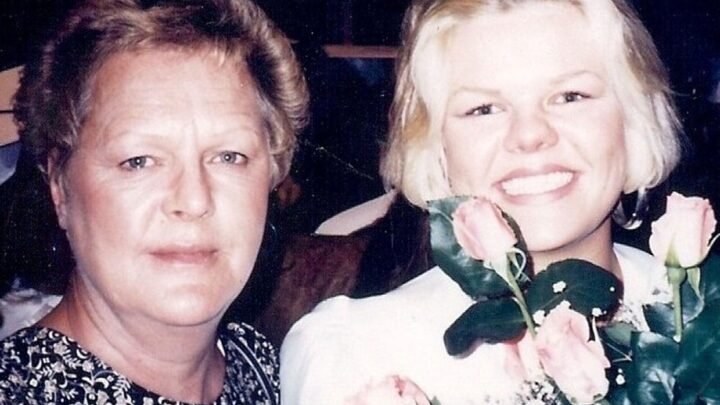
Michelle’s sister, Janelle Stonebraker, and her husband, John, sent a video statement. Her brother-in-law spoke of the “shock, anguish and horror” of 1979, and of a family who had lived through 39 Christmases without answers. Burns, he said, would “die alone.”
Burns still said he was innocent. Someone else, he insisted, had killed Michelle in that car.
He appealed, arguing that police should have needed a warrant before testing his DNA from the straw. On March 31, 2023, the Iowa Supreme Court rejected the appeal and upheld his conviction. A man who leaves a straw on a restaurant table, the court said, cannot expect the DNA on it to stay private.

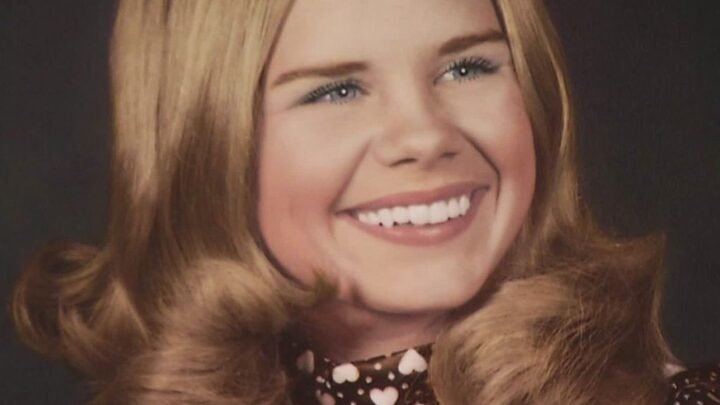
Her sister has always believed that Michelle helped catch her own killer. She fought so hard that night that he bled on her dress. For 39 years, that blood waited in an evidence room. In the end, it took one drinking straw to give it a name.