
Reader discretion: this story contains details of violence some readers may find distressing.
On the evening of January 18, 2003, a young lawyer named Neal Davis walked into the Harris County district attorney’s office in Houston.
He said he represented a client. He would not say who. But he had reason to believe that investigators could find a body behind a small patio home in the White Oak Bend subdivision, in the northwest suburbs.
Deputies got there in the middle of the night. In the backyard, in a hole that had been dug for a fountain, they could see a man’s head and shoulders. The family dog had been digging there.
All around the yard lay things that belonged inside the house: a mattress, a headboard, a footboard.
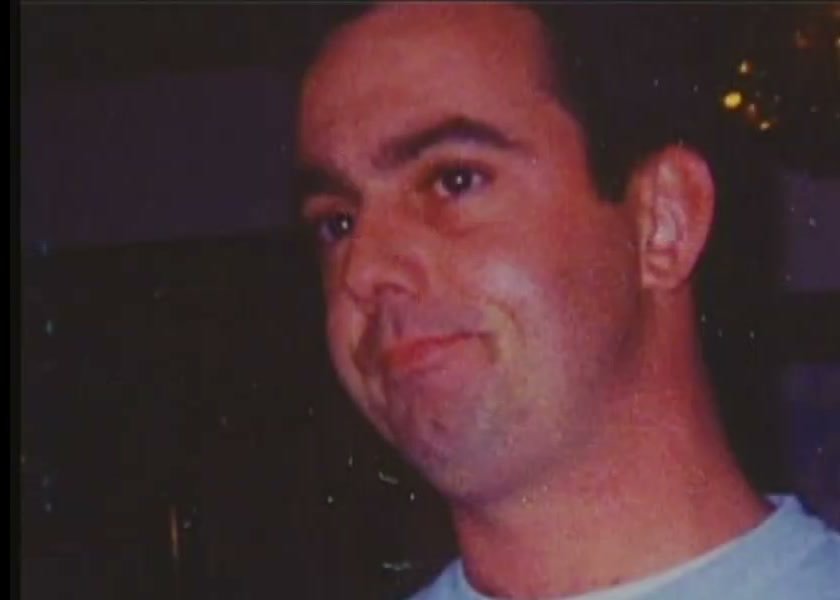
The man was Jeffrey Wright, 34, a carpet and flooring salesman. There were neckties knotted around his wrists. The medical examiner would count 193 stab wounds.
His wife and their two small children were gone.
The perfect couple on Berry Tree Drive
Jeffrey and Susan Wright had met in Galveston in 1997. She was 20 and working at a hair salon. He was 29, handsome and generous, with plans for a flooring business of his own. They married in October 1998. Their son was born a month later, and a daughter followed in December 2001.
To the neighbors they looked like a happy young family. Jeffrey’s boss called them “a Leave It to Beaver family.” His friends said he was a great guy who would do anything for you, and that he adored his kids.
Detectives soon learned that Susan Wright had checked into the psychiatric ward of Ben Taub General Hospital, and that the children were safe with relatives. Her lawyer told investigators she would not be speaking to them.
They started to piece together what she had been doing that week. It did not look like the behavior of a woman in shock.
Jeffrey had last been seen on January 13. On January 15, Susan had walked into a constable’s office and filed a domestic violence complaint. She said her husband had beaten her and their little boy and then left. She was worried about what he would do when he came back.
By then he had been in the ground for two days.
She called his mother too. Kay Wright would later tell a jury that Susan said Jeffrey had come back, taken some of his clothes, poured bleach on hers and left a note. His mother believed her. “Jeffrey will come home,” she told her, “and we’ll straighten this thing out.”
Inside the house there was fresh paint on the bedroom walls. Someone had ripped up carpet and tried to scrub the floor with bleach. She had driven to a nursery and bought bags of topsoil, and poured them over the hole in the yard.
A hunting knife turned up in a flowerpot. And Jeffrey had a $200,000 life insurance policy.
“I knew the second I stopped”
Susan Wright went on trial on February 24, 2004. Nobody disputed that she had killed her husband. The only question was why.
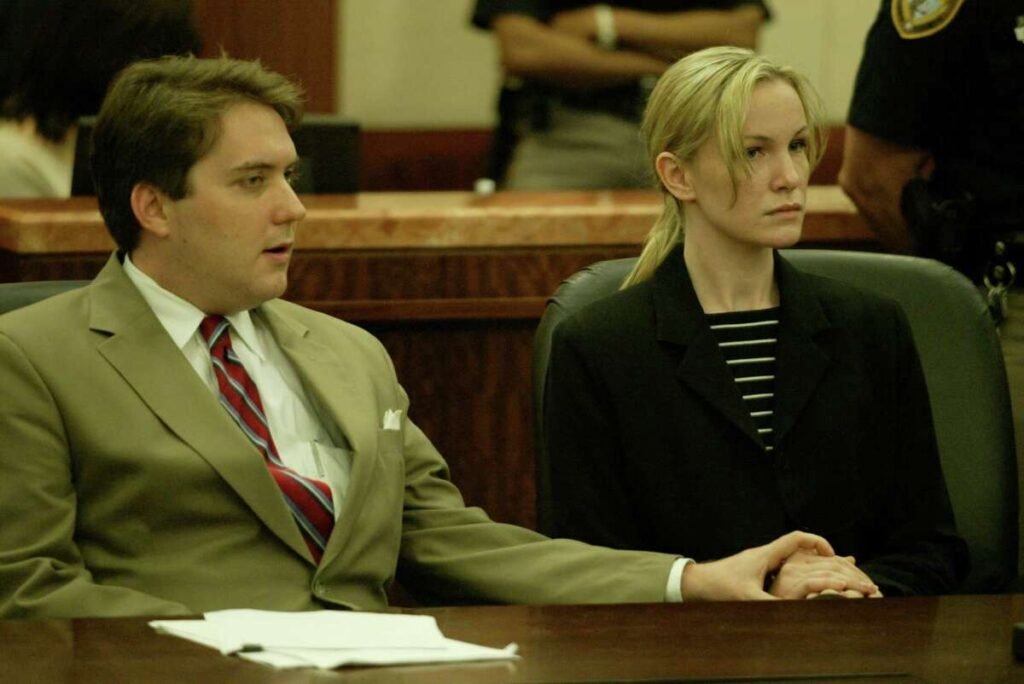
She took the stand for two days, weeping, and told the jury about a marriage nobody had seen. She said that behind the backslapping salesman was a drug user who controlled her, kicked her and punched her, and told her that if she ever left, he would kill her. She said she had been too ashamed to tell anyone. She said she kept quiet about the bruises and stayed out of sight when they showed.
On the night of January 13, she said, he came home high on cocaine from a boxing lesson and hit their son in the face. Later, in the bedroom, she said, he came at her with a knife.

“I threw my hands up, then I grabbed the knife,” she testified. She said she stabbed him and could not stop. “I knew the second that I stopped that he was going to kill me.”
Tests did find cocaine in his system. But there were no medical records and no police reports. Her own mother had seen bruises, but no witness could independently prove the abuse.
At one point, she admitted, their 4-year-old knocked on the door. She stopped, walked him back to his room, got a second knife from the kitchen and returned.
She said that for days she truly believed Jeffrey was still alive. She had cleaned the house, she said, so that he would not be angry when he came home. She had added the topsoil to weigh him down, because she was afraid he would get up.
The prosecutor rose to her feet.
The woman in the black pantsuit
Kelly Siegler was the fiercest trial lawyer in the Harris County district attorney’s office. She stood five foot four. She had grown up in an abusive household herself, and she did not believe a word of it.
She told the jury it had been a seduction. Wright, she argued, had lured her husband into bed and tied him to the posts so he would think it was a game. Then she had turned the bedroom into a torture chamber. The motive was the life insurance.
“You managed to stab a guy who outweighs you by one hundred pounds?” she asked Wright on cross-examination. “And when you stabbed him the 56th or the 89th time or the 158th time, was your arm getting tired?”
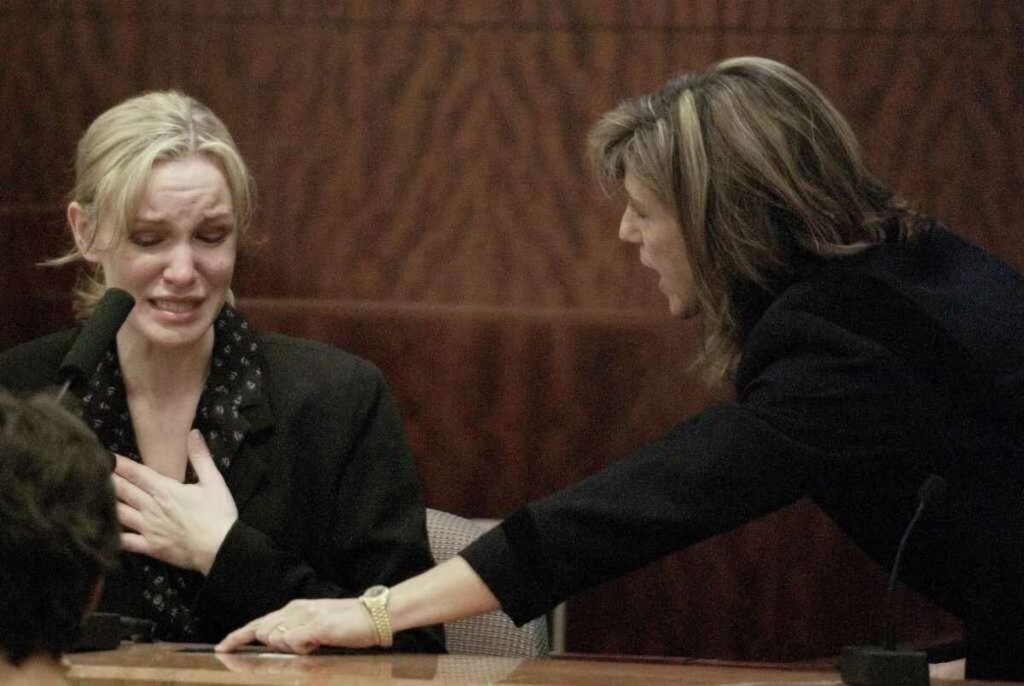
She reminded the jury of the little boy at the door, and the second knife. She called Wright a “red-handed, confirmed, documented liar.” She told them she was a good actress.
Then she showed them what she meant.
Continue readingPage 2 of 2