“Undetectable poisons”
The searches ran from April 11 to April 26, 2004.
Someone in that apartment had looked up “undetectable poisons.” Someone had looked up how to buy guns illegally. Someone had searched “how to commit murder.” And someone had looked up a sedative called chloral hydrate.
Her lawyers pointed out that both Melanie and Bill used that computer.
“I’m a nurse,” she said years later. “I was a nurse. And I don’t need to look up things like that.”
Then investigators found the gun.
On April 26, two days before Bill was last heard from, Melanie bought a .38-caliber Taurus revolver in Easton, Pennsylvania, using a Pennsylvania license with her aunt’s address on it. She also bought bullets that matched the ones in her husband’s body. When she filled out the restraining order papers, she answered “no” when asked if there were guns in the house.
The revolver has never been found.
“Of course, it’s a coincidence,” she said.
Then came the prescription. On the morning of April 28, Melanie dropped the boys at daycare at 8:20. At 8:32, a prescription for chloral hydrate was filled at a Walgreens in Edison, about a mile and a half away. It was written in the name of a patient from her clinic. When police found Bill’s Maxima, there was a syringe and a chloral hydrate bottle inside.
The prescription pad carried the name of a doctor at the clinic: Dr. Bradley Miller.
The doctor
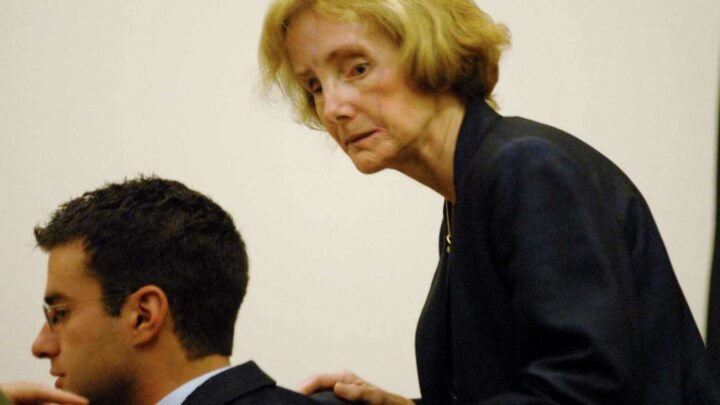
Miller was not just Melanie’s boss. They had been having an affair for about three years, and they had talked about marriage and children.
He told investigators, and then he agreed to help them. He secretly recorded conversations with her. On those recordings she said again and again that she had nothing to do with Bill’s death.
But in court, Miller looked at that prescription and told the jury what he saw.
“That’s not my signature, and it appears to be Melanie McGuire’s handwriting.”
He testified that he knew nothing about a gun. Investigators found no evidence connecting him to the killing.
The line in the plastic
Some of the most damaging evidence came from something nobody thinks about: a garbage bag.
When Melanie moved out, she gave Bill’s clothes to an acquaintance in garbage bags, and police got those bags back. A forensic scientist named Thomas Lesniak compared them with the bags from the suitcases.
Plastic comes off a production line with tiny marks in the dye. Lesniak told the jury those marks work like a fingerprint of the machine that made it, and he traced them from one bag to the next. “This is your dye line,” he said.
The state said the bags from the suitcases and the bags from the apartment were made on the same equipment, from the same batch of raw plastic. The defense disputed it, and said the expert’s own data did not hold up.
There was more. Tape on the bags held tiny razor stubble, with DNA from both Melanie and Bill. The blanket around part of the remains was traced to a supplier of medical offices, including her clinic. Toll records put her driving through Delaware on the night of May 3, two days before the first suitcase was found. She said she had gone to shop for furniture.
Then there was that phone call. Her E-ZPass recorded a toll on the Atlantic City Expressway at 12:54 a.m. on May 2. Sixteen minutes later, Bill’s phone called the apartment. Prosecutors said she had made the call herself. [img 500 pub|Evidence is taken out of a bag in court during the seven-week trial in New Brunswick, New Jersey.|Court TV]
“The unluckiest woman in the world”
Melanie McGuire was arrested on June 2, 2005. Her trial opened in New Brunswick on March 5, 2007, and the papers called her the Suitcase Killer.
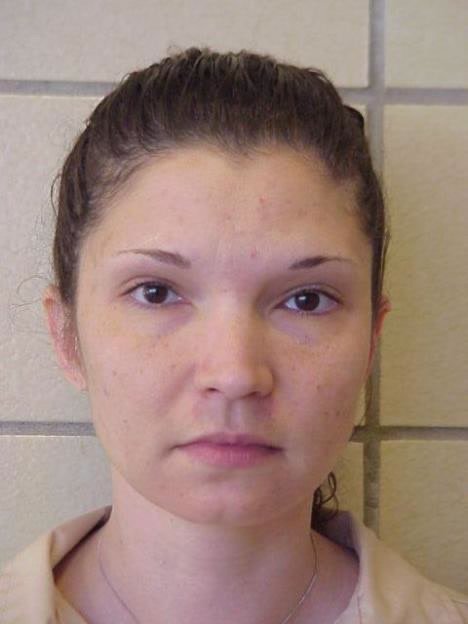
Her lawyer, Joseph Tacopina, told the jury that a petite woman could not have overpowered a man of Bill’s size, and that a crime like this could not have happened in that apartment without leaving a trace. Prosecutor Patricia Prezioso admitted there were unanswered questions. She said Melanie most likely had help, though no one else was ever charged.
But she asked the jury to add it all up: the searches, the gun, the prescription, the bags.
“Either Melanie McGuire is guilty,” the prosecutor said, “or she’s the unluckiest woman in the world.”
On April 23, 2007, after about 13 hours of deliberations, the jury found her guilty of murder, desecrating human remains, perjury and a weapons charge. They acquitted her of the other counts.
She collapsed. Between sobs she kept repeating two things: “I didn’t do it,” and “My babies.”
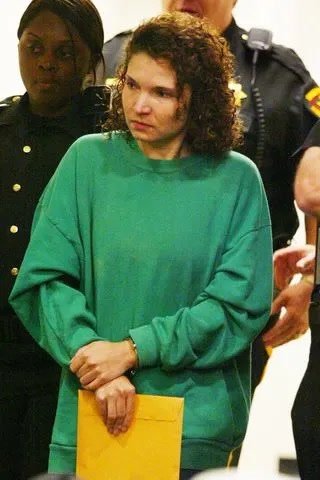
On July 19, 2007, a judge gave her life in prison plus five years. She will not be eligible for parole for more than 63 years.
“The killer is out there”
Bill’s sister Cindy raised the two boys. Melanie has had no contact with them.
In 2011 a New Jersey appeals court upheld her conviction, and the state’s highest court declined to hear the case. In 2014 she was back in a courtroom arguing that her trial lawyers had failed her. That request was denied.

She has never admitted anything. In a prison interview with ABC’s “20/20” she was still insisting on her innocence.
“There’s a murderer walking around,” she said. “Even if we discount what’s happened to me, the killer is out there, and it’s not me.”
She was asked what she would tell her sons, now young men.
“Make up your own mind,” she said. “Don’t accept what you’re just being told on the surface. Dig.”