
Reader discretion: this story contains details of violence some readers may find distressing.
Just after 4:30 in the morning on March 1, 2008, the only officer on duty in Rains County, Texas, got a call about a shooting at the Caffey house.
Deputy Charles Dickerson drove east along U.S. 69 and turned onto a one-lane gravel road into the pines. It was pitch-black. He was looking for a mailbox when he saw a dull orange glow through the trees.
The Caffeys’ cabin was on fire. It had been burning for some time. The metal roof had started to buckle.
The 911 call had come from the nearest neighbor, Tommy Gaston, so Dickerson raced down the road to his door. Terry Caffey, 41, was lying on Gaston’s living room floor in a T-shirt and pajama pants, with no shoes. He had been shot five times.
He had been left for dead in his burning house. He had climbed out of a window and spent nearly an hour getting through the dark to his neighbor’s door, falling into a creek on the way.
“They’re all gone,” he told the deputy. “Charlie Wilkinson shot my family.”
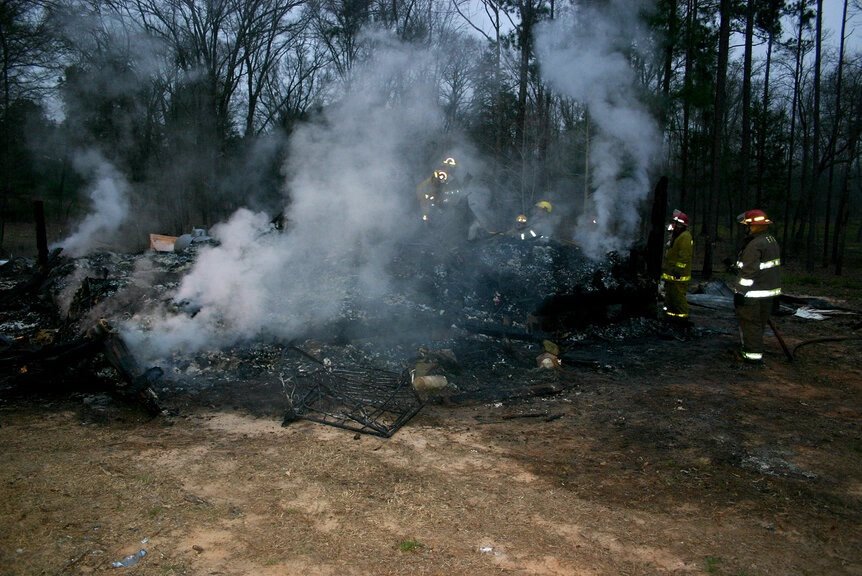
The trailer
Everybody knew everybody in Alba, a town of 492 people. Chief Deputy Kurt Fischer knew Charlie Wilkinson well. His own boys went fishing and four-wheeling with him. Charlie was 18, a high school senior in the National Guard, and the boyfriend of the Caffeys’ 16-year-old daughter, Erin.
On the way to the fire, Fischer had noticed Charlie’s car parked outside a blue single-wide trailer. He went there now. Charlie was lying on a mattress with a handgun on the floor beside him. He was led out in handcuffs and told what had happened. “I got drunk last night and passed out,” he said. A deputy went in to fetch his cowboy boots and saw that they were spattered with blood.
At daybreak the fire was still smoldering. Penny Caffey, 37, was dead. So were Matthew, 13, and Tyler, 8. A firefighter fell to his knees when the boys were found.
That left Erin.
Fischer went back to the trailer with a search warrant. In the living room he found a purse with her driver’s license in it. In the back bedroom he lifted a blanket piled up on the floor near the closet and saw a shock of blond hair. For a moment he thought it was a doll. Then two eyes opened.
She was sitting against the wall in flower-print pajamas. “Erin,” she stammered, when he asked her name. Then she looked around.
“I don’t know,” she said. “Where am I?”
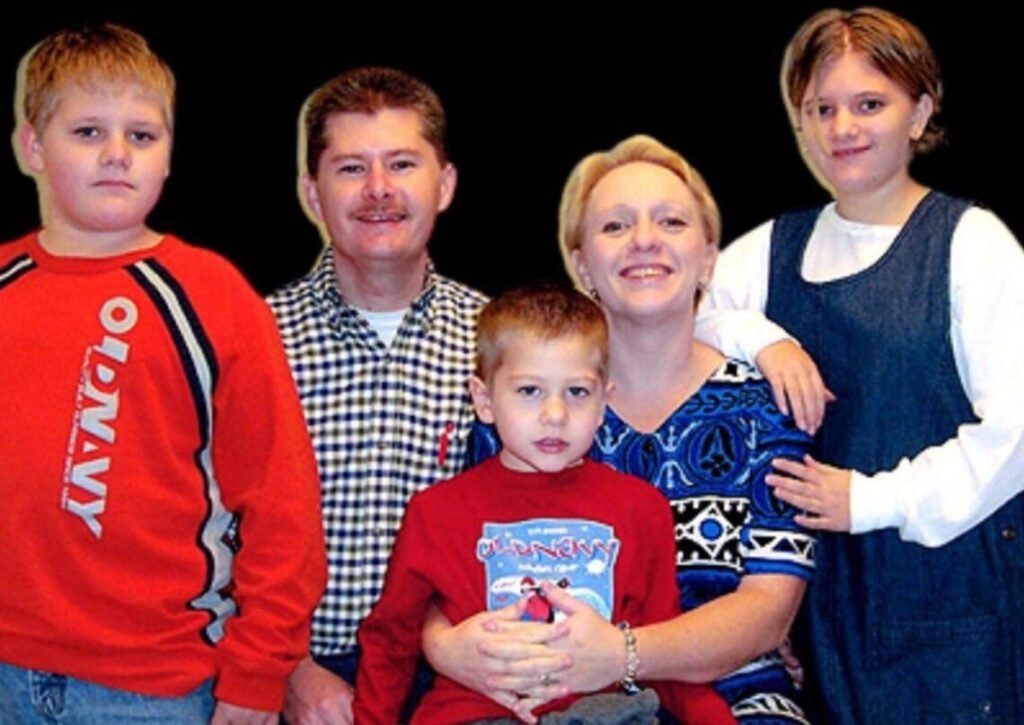
“You’re a tough little girl”
They took her to the hospital by ambulance. Nobody thought of her as a suspect. She seemed drugged. She was so small and so quiet that the police chief of the local school district, Shanna Sanders, had to lean in to hear her. Investigators assumed the killers had carried her off.
In a childlike voice she said she had woken up in a house full of smoke. There were two men with swords, dressed in black. She couldn’t remember the rest. She kept saying she was 14.
Sanders and a deputy stayed beside her for five hours. When she was released, they offered to go with her to see her father in intensive care. “You’re a tough little girl,” Sanders told her.
Only later would they think about the things that hadn’t fit. She didn’t smell of smoke. She showed no sign of smoke inhalation. When her drug tests came back, they were negative.
The girl on roller skates
If you had asked anyone in Alba that weekend to name the sweetest kid in town, plenty of them would have said Erin Caffey.
The family lived for Miracle Faith Baptist Church. Penny played the piano. Terry, a home health aide, was a lay preacher, and they had served as youth ministers. Over the driveway hung a cedar plank with a verse from Joshua: “As for me and my house, we will serve the Lord.” The children had been homeschooled for three years on a Bible-based curriculum. Erin sang solos on Sundays, often crying with joy as she sang.
When she turned 16 she got a job at the Sonic in Emory. She was the only carhop who delivered orders on roller skates. Boys parked on whichever side she was working. That is where she met Charlie.
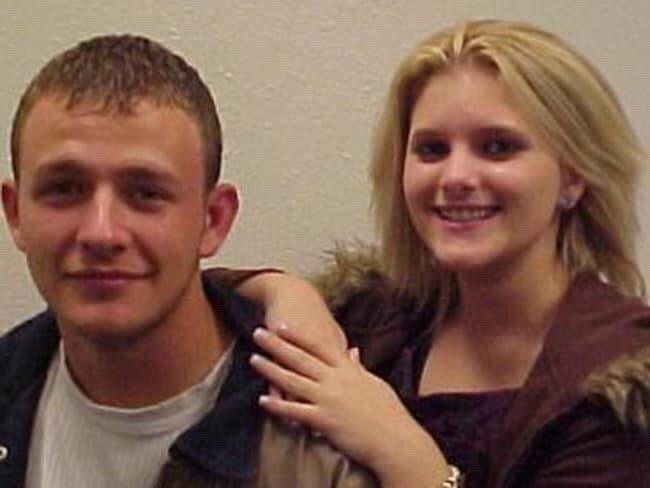
He drove a beat-up Ford Explorer and wore a black cowboy hat. He’d never been arrested. He fell hard, and his friends said he talked about her all day.
Terry never warmed to him. Then Charlie gave her a promise ring that had belonged to his grandmother. Penny saw it on her finger at a church function and ordered her to give it back. The Caffeys cut their time together down to one supervised visit a week. In February, after she was caught on her phone past curfew, she was grounded and the visits stopped.
Her classmates heard what she said next. A junior overheard her at lunch one day in mid-February. Killing her parents, she told Charlie, was the only way they could be together.
Charlie told several friends what he intended to do.
On February 27, Penny looked up Charlie’s MySpace page at the library and didn’t like what she read. When Erin got home from school, her parents were waiting in the living room.
“It’s over,” Terry told her.
She didn’t argue. She said through tears that she had wanted to end things for a while. She promised she would. Then the family went to Bible study.
Three nights later, after the house went quiet, she started making phone calls.
Back at the sheriff’s office in Emory, a detective sat down across from Charlie Wilkinson. “I’m in a lot of trouble,” Charlie said. Then he began to talk, and at first he talked about the girl everyone was busy comforting.
Continue readingPage 2 of 2