4:30
It had Mark Winger’s name on it.
Under that was his address. And then a time: 4:30 p.m.
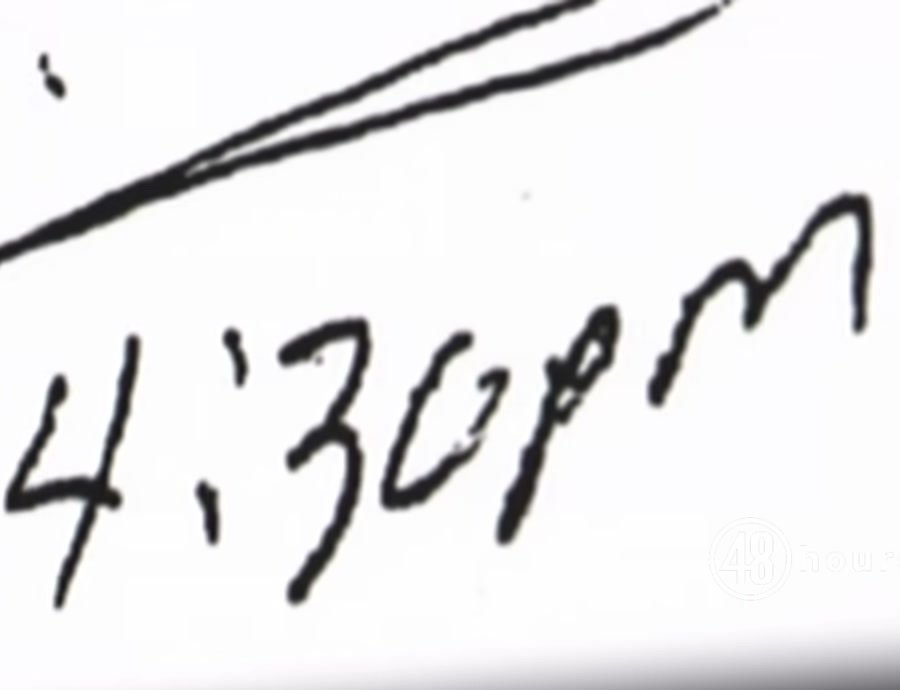
That was not a stalker’s note. It was an appointment.
“He says he doesn’t know Roger Harrington, has never met him, and does not indicate an appointment, when I have already seen the note which indicates an appointment,” Williamson said.
The rest fit with it. Harrington had carried a yellow coffee mug and a pack of cigarettes into the house. They were sitting on the table. His car held a tire iron and a knife. If he had come to kill someone, why bring a drink and leave his weapons outside, and hope there would be a hammer on the table?
Williamson took it to his bosses. They told him the case was closed.
The gun and the nanny
In January 1996, Mark Winger stopped by the police station to pick up his gun. He stayed about half an hour, asking Cox how the case was going. Was it still open?
“As far as I was concerned, he should have just accepted it was closed,” Cox said.
Donnah’s family had suggested he find some help with the baby. That same month he met Rebecca Simic, 23, who took the nanny job. Within the year she was pregnant. They eloped to Hawaii in October 1996, 14 months after Donnah’s death.
“I remember asking him how he could move on so quickly,” Simic later said, “and he explained to me that when you have a good marriage it’s natural for you just to want that again.”
He dropped in at the station again, Cox said, to mention he was getting remarried. Winger denied it. “He kept coming in,” Cox said. “I kept feeling like he was trying to find out if we were checking into anything.”
Cox walked over to his partner. “Something’s wrong here,” he told him. “Big time.”
Their bosses still said no.
The best friend
Mark sold the house, moved to the suburbs and told Donnah’s mother that the little girl could not call her grandma anymore.
He started going to church with his new wife. When his rabbi asked him about it, he said Judaism was too difficult and unforgiving. “Mark, I don’t know what you’re talking about,” the rabbi said. “What do you need forgiveness for?” Winger did not answer.
Then, one day in early 1999, he felt sick and went to the emergency room at the hospital where Donnah used to work. A woman there saw him.
Her name was DeAnn Schultz. She had been Donnah’s best friend. In February 1999, she went to the police.
She and Mark had been having an affair, she said, starting about a month before Donnah died. He had said things. “It would be easier for us to be together if Donnah just died.” And: “All you’d have to do is come in and find the body.”
She had told herself it was crazy talk. Then Donnah came home from that van ride.
“I’ve gotta get that driver in my house,” Mark told her, she said.
After the murders he warned her to keep quiet. She tried to kill herself several times.
Three Polaroids
Now the police reopened the case, and they found the evidence was gone. It had been released to Mark’s lawyer for a suit he had filed against the van company, blaming it for Donnah’s death.
When they got it back, they found three photographs nobody had studied in 1995.
Barringer’s Polaroids had captured the room before the paramedics moved anyone. Mark had said Harrington was kneeling at Donnah’s head, was shot and fell backward, so that his feet stayed near her head.
The pictures showed the opposite.
“It was over,” Williamson said. “Roger Harrington’s head and feet were in the opposite way of what Mark told us had happened.”
Blood spatter experts agreed. Cox, the man who had called Winger a hero, did not hide from what he had done. “I hurt Roger Harrington’s family,” he said. “I ran his name through hell for no reason. He was an innocent victim.”
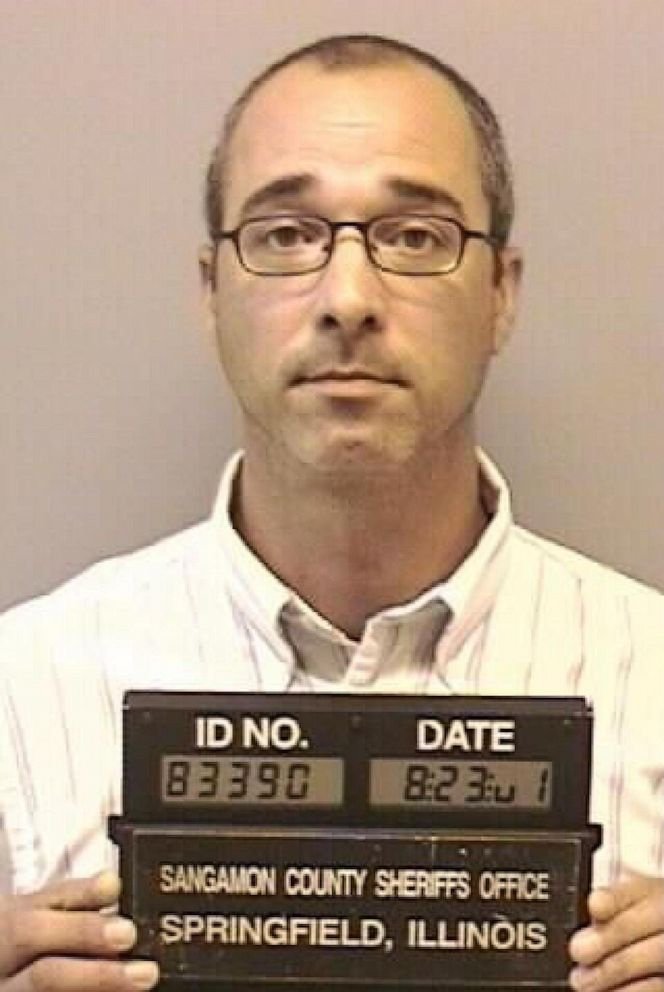
On August 23, 2001, Winger was indicted for both murders and arrested at work. His wife was at a McDonald’s Playland with the kids when his secretary called.
Prosecutors said he had planned it from the moment Donnah came home from that ride. He had told the owner of the van company he wanted to talk to the driver directly. Then he lured Harrington to the house on the pretext that they needed to talk, and shot him. When Donnah came out of the bedroom to see what was happening, prosecutors said, he beat her with the hammer.
Mark never took the stand. His lawyers said the paramedics had moved the bodies. The paramedics denied it.
On June 5, 2002, after 13 hours of deliberation, the jury found him guilty of two counts of murder. He stared straight ahead. Then he turned to his family, said he loved them and shrugged.
“It’s something we’ve been waiting for for seven years,” Helen Harrington said outside court. “Justice has been served.”
He got life without parole.
One more plot
He was not finished.
In prison he asked another inmate to find someone to deal with two people: DeAnn Schultz, who had testified against him, and a childhood friend who had refused to post his bail. In 2007 he was convicted of soliciting their murders, and another 35 years were added.
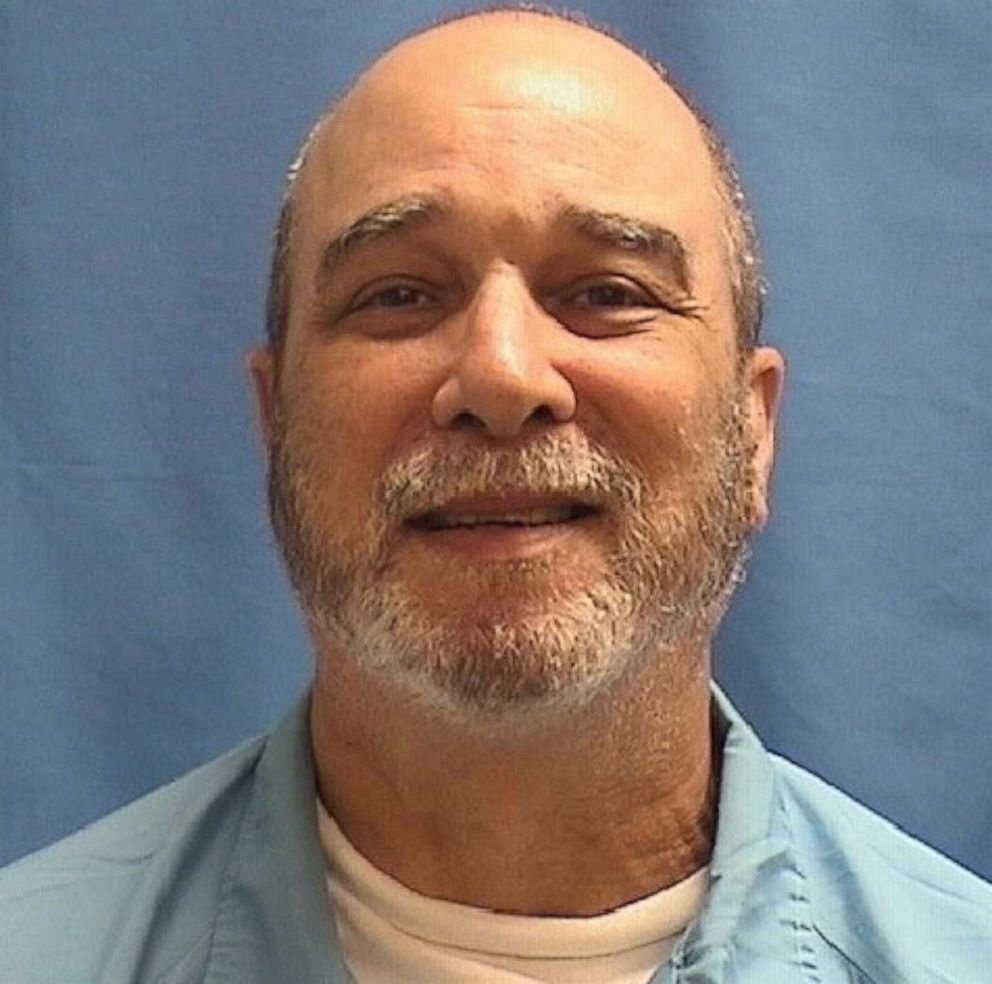
He has always said he is innocent, and he remains in an Illinois prison. He has never explained the note. “I can’t offer you any answers,” he told 48 Hours, “to why Roger Harrington had 4:30 written on a note.”
Rebecca Simic raised all four children, moved them away from Springfield and helped the girl find Donnah’s family again.
“I have no idea why he did it,” Donnah’s mother said. “I will never understand why he did it.”