10:23 a.m.
At 10:23 that morning, in the middle of the calls he was making about his missing wife, Mark Hacking’s credit card was used at an R.C. Willey furniture store in Salt Lake City. It was 26 minutes before his call to police at 10:49.
He had bought a new mattress.
Police reviewed the store’s surveillance video. Then they found the old mattress. It was in a dumpster behind a church building at 951 East 100 South, less than a block from the Hackings’ front door. Its serial numbers matched the box spring still sitting in the couple’s bedroom.
There was more. In the bedroom, investigators found blood on a knife, on the headboard of the bed, and on a bed rail. They found flakes and smears of blood in Lori’s car, the car that had been left near the park. The blood in the car matched the blood in the bedroom.
Then there was the convenience store.
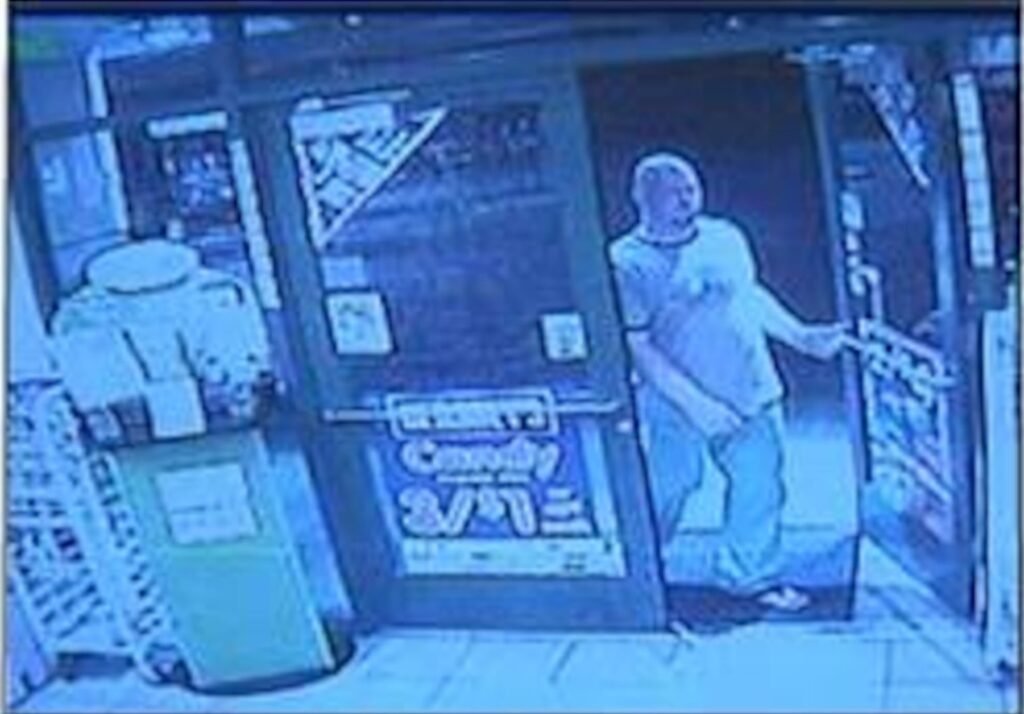
At 9:19 the night before, Mark and Lori had stopped together at a Maverik store near their apartment to buy soft drinks. The clerk said they seemed distant. They were in and out in about three minutes.
At 1:18 a.m., Mark came back alone to buy cigarettes. He had changed into scrubs and flip-flops. The clerk noticed him standing at the counter, studying his hands.
“He killed her as she slept”
On Saturday, July 24, Mark’s brothers Lance and Scott went to see him at the psychiatric hospital. Lance confronted him with the evidence police had gathered and begged him to say where Lori was.
That evening, Mark confessed to his brothers.
He had killed Lori while she slept, he told them, and had put her body in a trash bin. By the time anyone knew, the trash had been hauled away.
Mark’s family later said that he had confessed everything to Lori on the night of July 18. She had found out there was no medical school. She was, they said, “deeply hurt.”
On July 31, both families called off the search. On August 2, police arrested Mark at the hospital. A week later he was charged with first-degree murder.
33 days in the landfill
Lori’s body had gone from a dumpster to the Salt Lake County landfill, under thousands of tons of garbage.
Police searchers went in with cadaver dogs, night after night, through the heat of the summer. In September they switched to a daytime search by hand. A team of 20 to 25 officers and volunteers in masks and orange vests raked through the trash, foot by foot.

At about 8:20 a.m. on October 1, 2004, Sgt. J.R. Nelson turned over a pile and found her. She was identified through dental records about six hours later.
“I probably had the worst time of it myself after turning over the pile and locating her,” Nelson said.
“It means everything to us to find Lori’s mortal remains so that we might lay them to rest,” Lori’s family said.
“I intentionally shot Lori Hacking”
On April 15, 2005, Mark Hacking stood in front of 3rd District Judge Denise Lindberg and pleaded guilty to first-degree murder.
The judge asked him to state what he had done.
“Your honor,” he said, “I intentionally shot Lori Hacking in the head with a .22 rifle on July 19, 2004.”

On June 6, 2005, he was sentenced to six years to life in prison, the most Utah law allowed at the time. Lori’s mother, Thelma Soares, called the killing a senseless waste of three lives, counting the baby.
That same day, Mark’s father read a statement from his son. “I wish I could take back all the lies I have told and replace them with the truth,” it said. “I wish I could put Lori back into your arms.”
The six-year minimum caused outrage. A month later, the Utah Board of Pardons and Parole announced that Mark would not even be considered for parole until 2035, after serving 30 years.
In 2006, Utah passed “Lori’s Law.” Anyone convicted of first-degree murder in the state now has to serve at least 15 years before they can be considered for parole.
Lori’s family removed the name Hacking from her headstone. In its place is the Portuguese word “filhinha.” It means “little daughter.”