The laptop
The Major Case Squad had a problem with the threats. Joyce Meyer had plenty of critics. But detectives could not find anyone else, anywhere, who had been getting threats against their family. Only Chris.
Then computer forensics experts finished with Chris’s laptop.
The threatening emails had been sent from an account called destroychris@gmail.com. And the threats, prosecutors said, had been typed on Chris Coleman’s own laptop. The account itself had been set up on that same machine.
There was more on the laptop. Chris had written down that November 5, 2008, was the day Tara “changed his life.”
The first threat arrived nine days later.
Investigators also compared the typed threats with Chris’s own writing. One note left in the mailbox misspelled “opportunities” as “oppurtunities.” The same misspelling turned up in Chris’s work files.
The red paint
Then there was the paint.
In the interview room, a detective had asked Chris whether he had any paint at the house.
“I don’t think so,” he said.
“Any spray paint?”
“I don’t know. If I do, it’s old.”
Detective Karla Heine went through Chris’s credit card records. On February 9, 2009, three months before the murders, there was a purchase at a local hardware store. It was one 12-ounce can of Rust-Oleum spray paint, in Apple Red, the same brand and color as the paint on the Colemans’ walls. It cost $3.49.
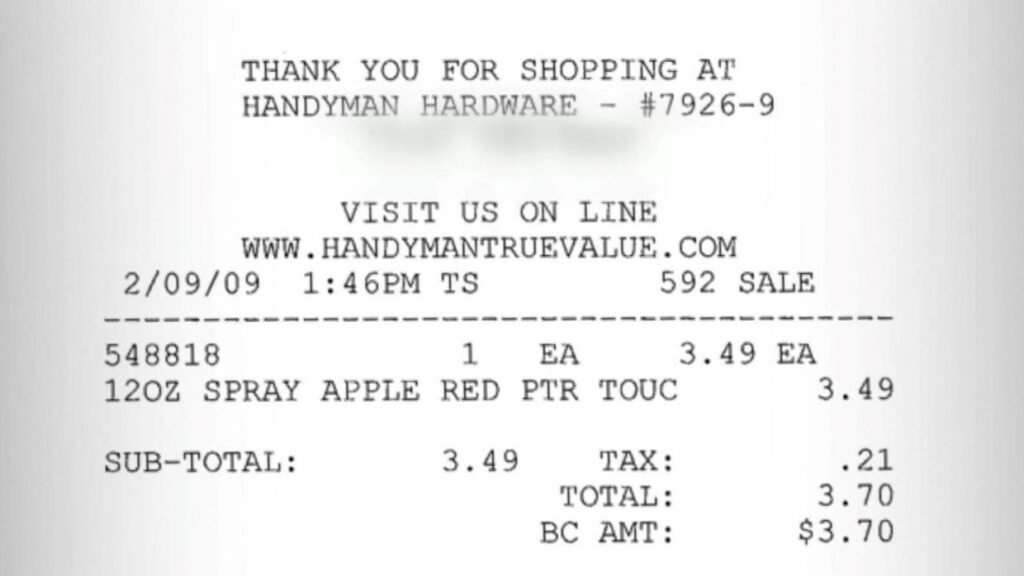
The computerized signature on the receipt said Christopher Coleman.
Chris had also given police a sample of his handwriting, voluntarily. The crime lab compared it to the letters sprayed on the walls. Investigators said they matched.
Dead before he left
Then came the question of time.
Chris’s whole story rested on one thing: Sheri and the boys were alive when he left for the gym at 5:40 a.m. Whoever killed them, he said, must have come in during the hour and ten minutes he was gone.
The detectives had already pushed him on it in the interview room.
“When you left the house this morning, was your wife alive?”
“Oh, yeah,” Chris said. “She was laying right beside me.”
“What would you say if I told you that I don’t think she was?”
When paramedics arrived that morning, rigor mortis had already set in. Forensic pathologist Dr. Michael Baden would tell the jury that Sheri, Garett and Gavin had most likely died before 3 a.m., and definitely before 5 a.m. “This isn’t even a close call,” he said.
Other things didn’t fit either. There was no forced entry. Chris had installed his own surveillance cameras at the house, but the recorder was missing. Barlow’s camera, aimed at the front of the house, showed no strangers on the street and no strange cars. No unidentified DNA was found. And Sheri had fought her killer. She had two black eyes. The boys had not had the chance to fight.
Two weeks after the murders, Chris Coleman was charged with three counts of first-degree murder.
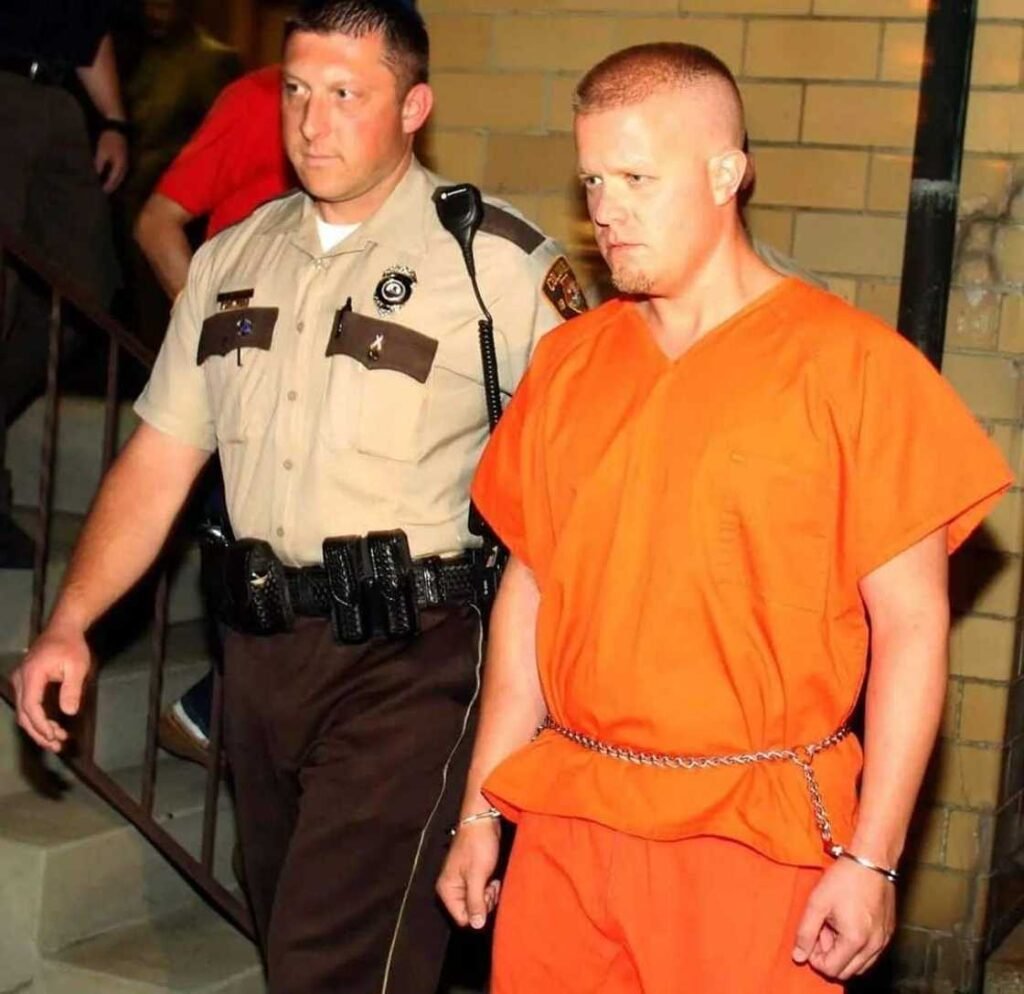
The trial
The trial began on April 25, 2011, in the Monroe County Courthouse in Waterloo, Illinois. Because of all the publicity, the jury was bused in every day from Perry County, more than an hour away. Prosecutors asked for the death penalty.
Tara Lintz testified. She said she and Chris talked or texted “all the time, constantly.” Asked whether they had planned to marry, she said: “The divorce had to happen first.” She said Chris had told her he would serve Sheri with divorce papers on May 5, the day of the murders. He had never filed any. He had never spoken to a lawyer.
Prosecutors argued that Chris could not simply divorce Sheri. Joyce Meyer Ministries did not tolerate adultery, and an affair could have cost him his job. Sheri’s friends testified that she had refused to give him a divorce. One of them, Kathy LaPlante, said Sheri had told her that if anything ever happened to her, “Chris did it.”
The defense said red spray paint is common, anyone with access to the laptop could have created the email account, and time of death is not an exact science.
When the jury first voted, it was 7 to 5 for not guilty. Not because they thought Chris Coleman was innocent, jurors said later. They wanted something solid.
They found it on the back of a photo. It was a picture of Chris and Tara kissing, and it was dated October 21, 2008, weeks before the date Chris had given for the start of the affair.
“If he could lie about this,” one juror said, “he’s lying about everything.”
May 5, 2011
After about 15 hours of deliberations, late on May 5, 2011, the jury found Chris Coleman guilty of all three murders. It was two years to the day after Sheri, Garett and Gavin were found in their beds.
Outside the courthouse, the crowd cheered.
The jury found him eligible for the death penalty, but Illinois was about to abolish it. Judge Milton Wharton sentenced Chris Coleman to life in prison without the possibility of parole.
In December 2014, an Illinois appeals court upheld the convictions, finding the circumstantial evidence against him overwhelming.
Chris Coleman has never admitted anything. Asked by “48 Hours” over the phone whether he killed his wife and children, he said: “No. Absolutely not.”
Sheri’s friends raised money for victims of domestic violence and hoped to build a Little League field in Garett and Gavin’s names, for two boys who loved to play ball.