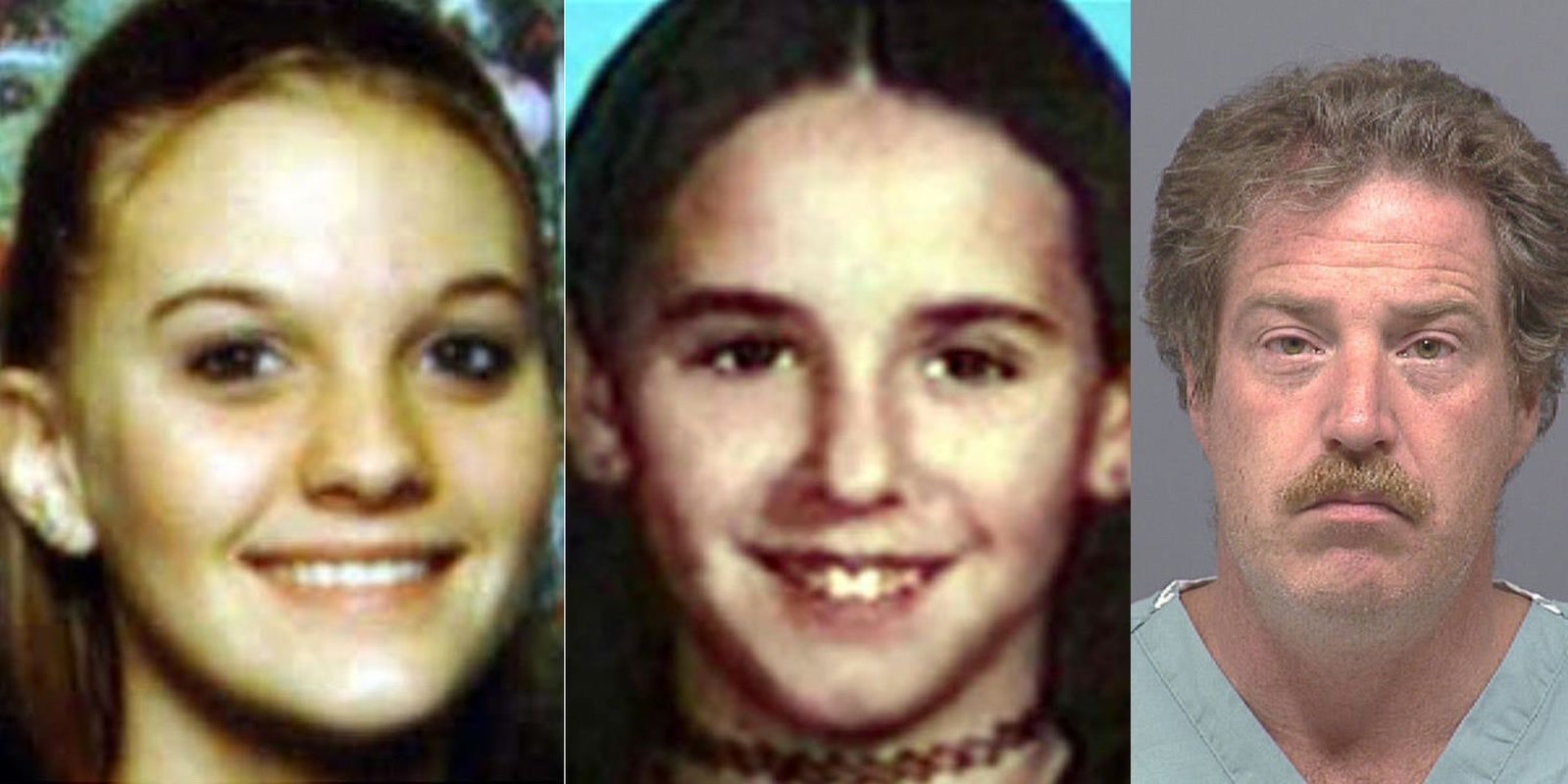
Reader discretion: this story contains details of violence some readers may find distressing.
On the morning of January 9, 2002, a 12-year-old girl in Oregon City, Oregon, ate breakfast with her little sister, told her mother “I love you,” and ran out the door to catch the school bus.
Her name was Ashley Pond. It was a short walk from the Newell Creek Village apartments to the stop. She never got there.
Her mother called 911 that evening. The first assumption was the usual one. She was 12, and she had probably run away.
For almost eight months, the search for Ashley would spread across the Pacific Northwest and then the country. She would turn out to have been a few hundred yards from her own front door the entire time.

Two months later
The girls of Newell Creek Village were a tight group. Ashley and her friend Miranda Gaddis, 13, lived in the same complex. They went to Gardiner Middle School. They were on the same dance team.
On January 23, a TV crew came to the bus stop to interview girls about their missing friend. One of them was Miranda.
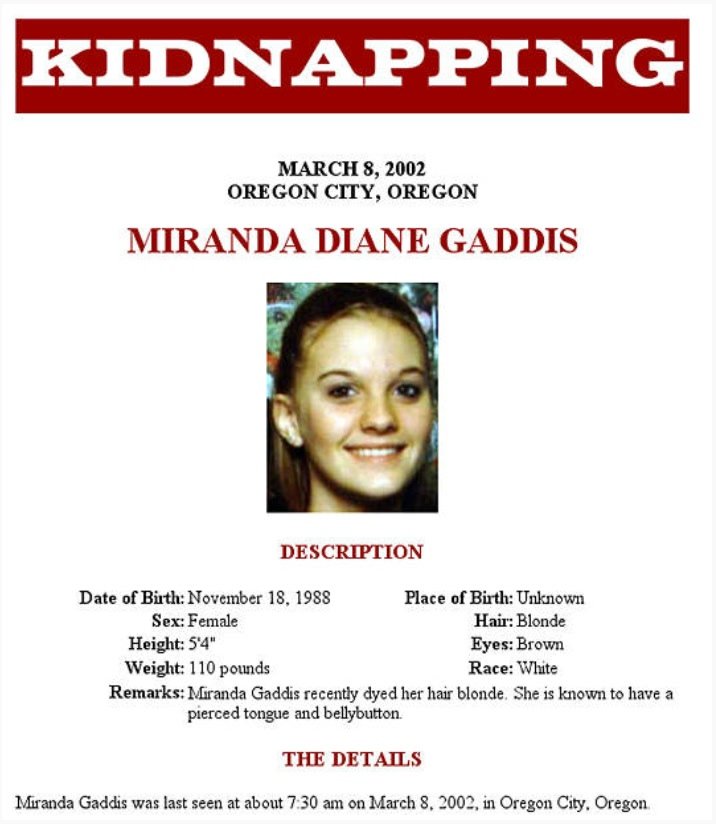
On the morning of March 8, Miranda got ready for school, left home, and did not arrive at the bus stop either.
Two girls. Same apartments. Same school. Same dance team. Same walk. Now the FBI was in Oregon City in force. “There is a growing belief that there was some kind of criminal activity involved,” a spokeswoman said. People magazine put the question in a headline: Who took these girls?
The man up the road
The road from the apartments to the bus stop ran past a dreary rented house on South Beavercreek Road. Ward Weaver III, 39, lived there. He was an industrial worker and the father of one of the girls on the dance team, and his house had become a kind of hangout for her friends. They came for sleepovers. Ashley had even stayed there for months at a time, when things were bad at home.
Weaver had a record. In the 1980s he served three years in a California prison for beating a babysitter with a block of concrete. One ex-wife had taken out a restraining order. Another accused him of hitting her over the head with a cast-iron skillet as she slept.
And in the summer of 2001, Ashley herself had gone to the authorities about him. A report was made. Nobody was charged.
So investigators came to see him. He let them. Search dogs went through his yard. He seemed almost to enjoy it.
As the months went on, Weaver did something few people in his position ever do. He began talking to reporters. He told them he was the FBI’s prime suspect, at a time when the public believed there was no such person. He gave tours of his house. On July 9 he went on Good Morning America. “I have no problem with them looking at me as a suspect,” he said.
He complained that the FBI was telling parents not to let their daughters sleep over at his house.
“I’m putting in a Jacuzzi”
There was one thing in the yard that everybody noticed. After the girls vanished, Weaver and his son had dug a hole behind the house and covered it with a new concrete slab.
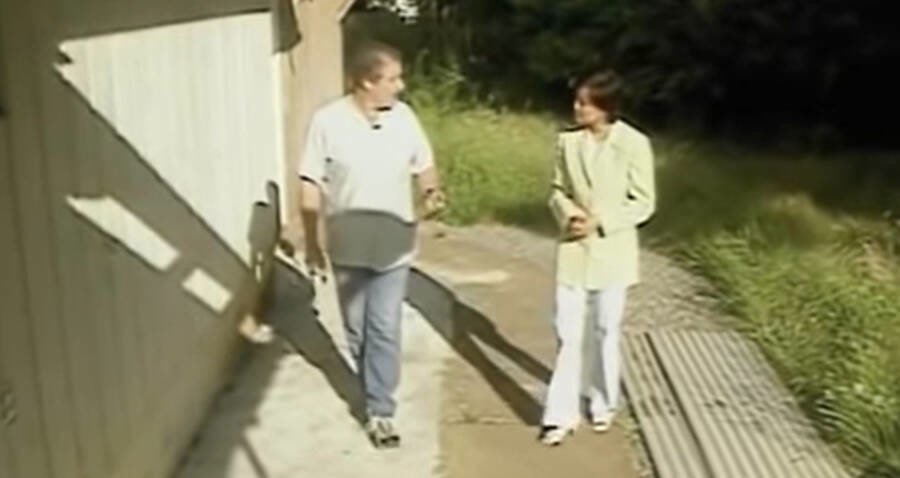
In early July, Weaver invited a KATU news crew over. He walked the reporter, Anna Song, across it as they talked. It was for a hot tub, he explained.
Asked about it by The Oregonian, he was even shorter. “I’m putting in a Jacuzzi,” he said. “The last time I checked that wasn’t against the law.”
In the KATU interview he said he hoped Miranda would come home. Ashley, he said, should “stay where she is.”
Some people had already seen enough. A private investigator, Harry Oakes, later told Dateline that his search dog had tracked Ashley’s scent to Weaver’s property that March, and reacted again at the edge of the slab. He turned in a report to the Oregon City police on March 20. Nothing came of it, he said. Weaver’s ex-wife Kristi Sloan said she told the FBI he was dangerous and had been digging in the back yard. FBI officials later said they did not have the probable cause they needed to search.
Then, on August 13, 2002, everything changed in one afternoon.
Weaver attacked his son’s 19-year-old girlfriend at the house. She got away, ran into the street and flagged down a car. He was arrested that day.
His son, Francis, who had defended him for months, picked up the phone. He told emergency dispatchers what his father had done to his girlfriend. Then he told them something else. His father had confessed to killing Ashley and Miranda.
Even then it took 10 days. Protesters gathered at the house. Ashley’s stepmother taped a sign to the slab that read “Dig Me Up.” On August 23, the FBI got its warrant, put up two white tents and sealed the property.
On Saturday, August 24, agents walked past the house to a small shed at the back of the yard.
Continue readingPage 2 of 2