Reader discretion: this story contains details of violence some readers may find distressing.
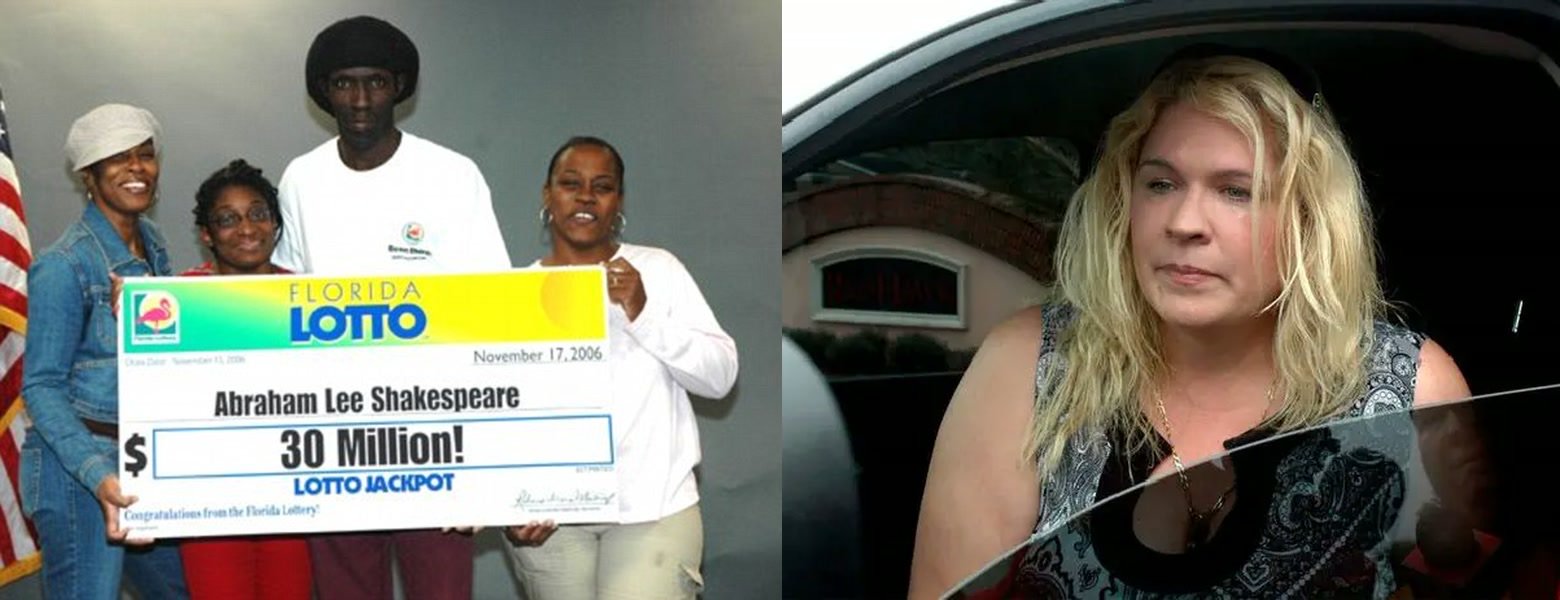
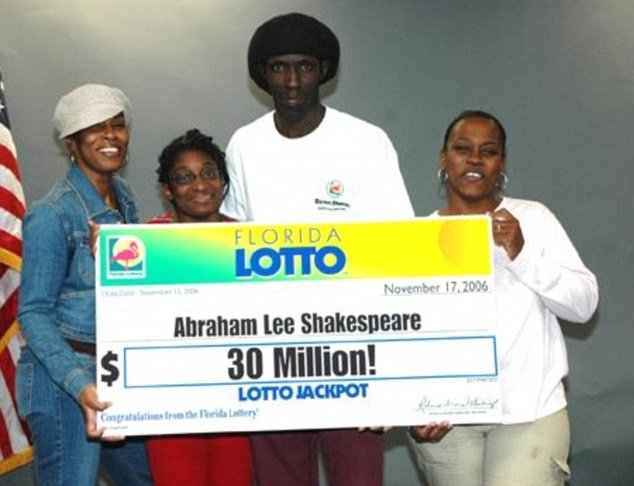
On November 17, 2006, a tall, thin man in a white T-shirt and a black knit cap posed for the cameras behind a giant cardboard check from the Florida Lottery.
The check said “Abraham Lee Shakespeare.” Under his name, in big black letters: “$30 Million!”
Abraham was 40. He worked as a helper on a delivery truck and lived in a working-class part of Lakeland, Florida. Two days earlier, on a run toward Miami, he had asked a co-worker to grab him two tickets at a convenience store in Frostproof. One of them hit.
Less than three and a half years later, police would find him under a slab of concrete behind a house in Plant City. The woman who put him there spent most of that time telling everyone he was alive.
“I’d have been better off broke”
Abraham took a lump sum of about $17 million. He bought a $1.1 million house in a gated community in north Lakeland, a Nissan Altima and a Rolex from a pawnshop. Most of the rest went out the door to other people.
The co-worker who bought the ticket sued him, claiming Abraham had stolen it from his wallet. In October 2007 a jury took little more than an hour to side with Abraham. But the requests never stopped. Relatives, old friends and total strangers wanted loans, gifts and investments.

“I’d have been better off broke,” he told his brother. To a childhood friend he said, “I thought all these people were my friends, but then I realized all they want is just money.”
The woman with the book
In 2008, a woman named Dorice Moore came into his life. Everybody called her Dee Dee. She was in her mid-thirties, blonde, confident, and she said she wanted to write a book about him, about what the money had done to his life.
She started helping him with his finances. She dealt with people who owed him money. Abraham could barely read or write.
In January 2009, his house was transferred to American Medical Professionals, a company controlled by Dee Dee. In February she opened an account for a new firm, Abraham Shakespeare LLC, and gave herself signing authority. Soon about $1 million had moved out of it. She bought a Hummer, a Corvette for her boyfriend and a truck, and went on vacation. Later she would say the money was a gift.
Then, in April 2009, Abraham stopped being seen.
He was alive, she said
According to investigators, the last day anyone used Abraham’s cell phone as Abraham was April 6, 2009.
The phone kept working anyway. Through the rest of that year, friends and relatives got text messages from it. They didn’t sound like him. Some people knew why that was strange: Abraham couldn’t really read or write.
His mother received a card with $100 and a cross inside. Later she got a typed two-page letter, written as if Abraham had sent it, saying he had left town. Dee Dee offered the mother of one of Abraham’s sons a $200,000 house if she would tell detectives she had seen him recently.
At first his family hoped he had simply taken what was left of his money and gone somewhere warm. But by November, his cousin had heard nothing for seven months. On November 9, 2009, he reported Abraham missing.
Detectives went to the woman who had been closest to Abraham’s money.
Dee Dee Moore told them Abraham was fine. He was tired of people asking him for money, she said, so she had helped him leave. Over several interviews she placed him in Texas, in Jamaica, in Puerto Rico, in Orlando, in a hospital. She said she had paid him for his house in cash. Investigators found no sign she had paid him anything.
Polk County Sheriff Grady Judd would later call her a “master manipulator and a con artist.” “Frankly, she’s a con artist,” he told the Associated Press. “If she were trying to sell me something, I wouldn’t buy it today.”
The call at Christmas
Around Christmas 2009, Abraham’s mother, Elizabeth Walker, got a phone call. The man on the line said he was her son.
The voice was wrong. She told police.
Detectives traced the call to an old friend of Abraham’s named Greg Smith. When they confronted him, Greg told them Dee Dee had paid him to make it. “I didn’t feel right about it,” he told detectives, “but I thought I was helping Ms. Walker feel better, because she’s been worried about her son.”
Dee Dee had no idea that Greg had just switched sides. He agreed to work with the Polk County Sheriff’s Office as a confidential informant. From then on, every time he met Dee Dee, he was wearing a wire.
Continue readingPage 2 of 2