
Reader discretion: this story contains details of violence some readers may find distressing.
At 10:11 on the morning of December 23, 2015, two days before Christmas, a 911 dispatcher in Connecticut picked up a call from a house in Ellington, a quiet town north of Hartford.
“911. Can I help you?”
The man on the line could barely get the words out. “I need help.”
A home alarm had been set off on Birch View Drive a few minutes earlier, with the panic button. When state troopers went inside, they found 39-year-old Richard Dabate on the kitchen floor. One arm and one leg were zip-tied to a folding chair. He had a number of shallow cuts on his body.
His wife, Connie, was in the basement. She had been shot twice. She was 39 years old.

The family on Birch View Drive
From the road, the Dabates had a nice life. They lived in a big yellow colonial on a spacious lot in Ellington with their two boys. Richard, who went by Rick, worked in IT at Duncaster, a retirement community in Bloomfield. Connie had taken the day off.

That morning, Richard said, had started like any other. The boys caught the school bus a little after 8. Connie was getting ready to go to an exercise class at the YMCA. Richard left for work.
Within two hours, she was dead.
“A Vin Diesel-like voice”
Richard was taken to the hospital, and that same day, detectives sat down at his bedside to ask him what had happened. The interview was recorded, and it went on for hours.
His story was full of detail.
He said he had left for work at about 8:30, then realized he had forgotten his laptop. He pulled over by the side of the road and sent an email to his boss saying he would be late, because his home security system had been sending him alerts. Then he turned around and drove home.
When he walked in, he heard a noise upstairs. He thought it was the cats. He went up to look.
There was a man in the house.
He was big, Richard said, maybe six foot two and wide, dressed in dark green camouflage that looked like one jumpsuit, with a mask that seemed to be part of it. Richard couldn’t see his eyes. He only heard his voice.
“A Vin Diesel-like voice,” Richard told detectives, “asking for my money, asking for my wallet, and asking for my PIN numbers.”
Then, he said, he heard Connie come home from the gym. He yelled at her to get out of the house. Instead, he said, she ran down to the basement, where the couple kept a gun in a lockbox.
The intruder followed her. Richard said he heard “the loudest bang” and saw his wife on the ground.
After that, his account went on, the man overpowered him, zip-tied him to a folding chair, poked him with something sharp, and started burning him with Richard’s own blowtorch. Richard said he got one hand free and turned the torch back on the man. The intruder dropped it, put his hands to his face and ran out of the house.
Richard said he crawled upstairs, hit the panic button on his alarm key fob, found his phone, and called 911.
Nothing in the house agreed with him
While Richard was talking in the hospital, investigators were walking through the house.
There was no sign of forced entry. Nothing had been taken. In the basement, one small window had been pushed in, but troopers noted that the sill still had dust and dirt on it and there were no footprints in the soil outside. The window glass lay on the floor below it, unbroken.
State police brought in dogs to follow the intruder’s trail. They found none leading away from the property. The only scent the dogs kept following was Richard’s, all the way to the ambulance that had taken him away.
Back at the hospital, the questions got harder.
“I can tell you at least 15 inconsistencies that we’ve had in your story since we started,” one detective told him. Being zip-tied to a folding chair, the story, “everything doesn’t add up.”
“I did not kill my wife,” Richard said. “There was a man in my house.”
“I’m gonna stick with my truth.”
The other woman
Then Richard told the detectives something else.
There was a woman named Sarah Ganzer, a friend he had known since junior high school. She was pregnant, and the baby was his.
At first he said it was an unusual arrangement that Connie knew about, almost a surrogacy. Later he admitted that Connie did not know about the pregnancy at all, and that Sarah believed he was getting a divorce.
That night, detectives went to see Sarah. She told them she and Rick had planned to meet that very day to exchange Christmas presents. The last text she got from him had come the night before:
“I’ll see you tomorrow, my little love nugget.”

The tracker on her waistband
Richard was not arrested. Not yet. Instead, investigators started collecting the data that the Dabates’ house had quietly produced that morning.
They got search warrants for both cell phones, the computers, the home alarm logs, and one more thing that almost nobody would have thought of in 2015.
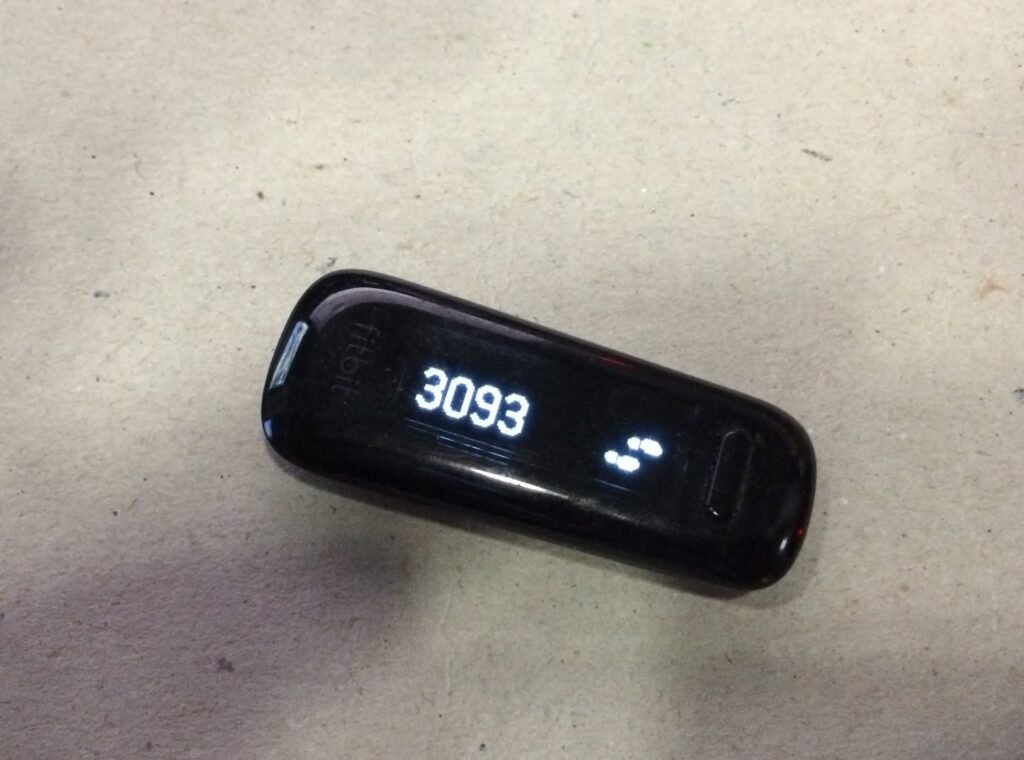
When Connie went to the gym, she wore a Fitbit One, a small activity tracker clipped to her waistband. It counted steps and logged movement minute by minute.
Richard had put the shooting at about 9:05 a.m., not long after Connie got home.
Her Fitbit said she got home later than that. At 9:23 a.m., it registered movement at the same moment the garage door into the kitchen opened. And then it kept going. Between 9:18 and 10:05 a.m., the tracker recorded 1,217 feet of movement around the house.
Detectives measured the route Richard described, from Connie’s car to the spot in the basement where she died. It was 125 feet at most.
The Fitbit’s last movement came at 10:05 a.m. Six minutes later, Richard was on the phone with 911.
According to the device on her body, Connie Dabate had been alive and walking around her own home for most of an hour after the moment her husband said she was shot.
A defense lawyer could argue with a Fitbit, and Richard’s would. So detectives went looking for something harder to explain away. They opened the records from Connie’s phone.
Continue readingPage 2 of 2