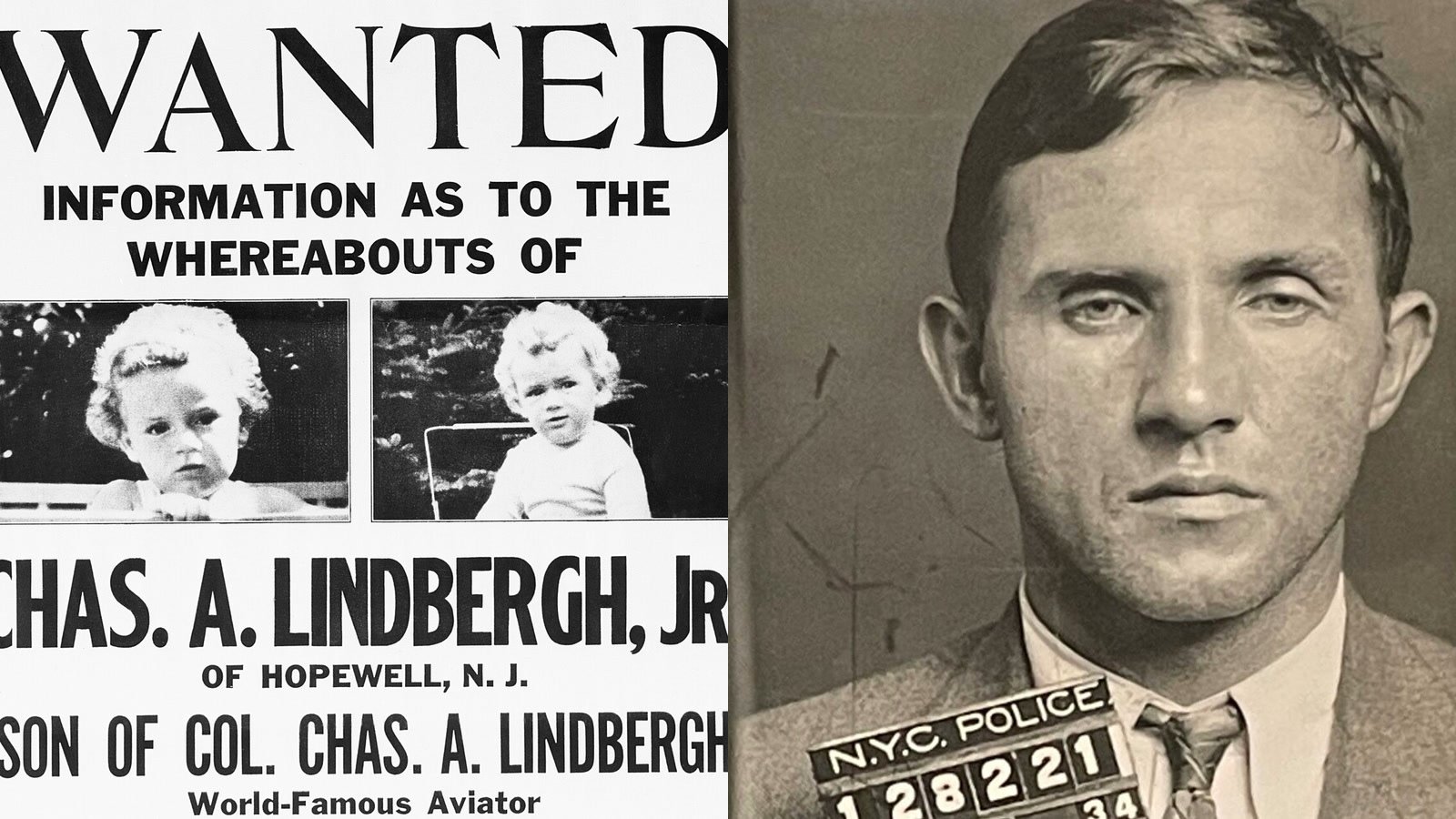
Reader discretion: this story contains details of violence some readers may find distressing.
On the evening of March 1, 1932, a nurse named Betty Gow walked into the upstairs nursery of a new country house near Hopewell, New Jersey, to check on the baby.
The crib was empty.
The baby was Charles Augustus Lindbergh Jr., 20 months old. His father was Charles Lindbergh, the pilot who had flown alone from New York to Paris five years earlier and become the most famous man in America. His mother was Anne Morrow Lindbergh.

Lindbergh searched the room. On the windowsill he found an envelope.
The note on the windowsill
The note inside was badly spelled. “Dear Sir!” it began. “Have 50.000$ redy.” It asked for $25,000 in $20 bills, $15,000 in $10 bills and $10,000 in $5 bills, and it warned the family not to go to the police.
At the bottom was a strange signature: two interlocking blue circles around a red one, with holes punched through the paper. The kidnapper would put that symbol on every note that followed, so the family would know the letters were real.

Outside, under the window, there were footprints, pieces of a homemade wooden ladder and a baby’s blanket. Someone had climbed up to the second floor, taken the boy from his crib and climbed back down in the dark.
Within hours, the story was everywhere. Police, federal agents, reporters and sightseers poured onto the property. The New Jersey State Police took charge. The federal Division of Investigation, the agency that would soon be renamed the FBI, joined in.
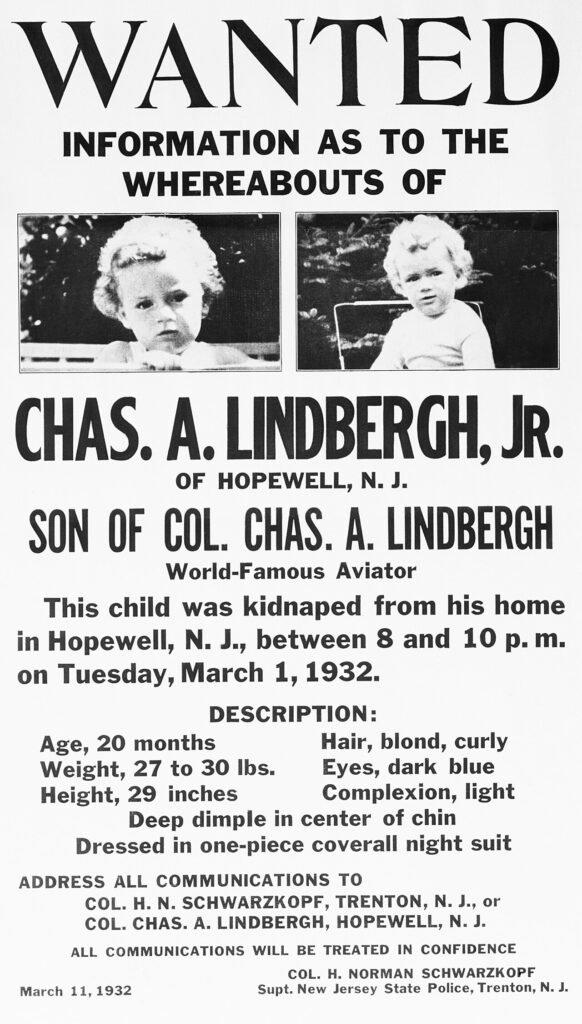
“John”
More notes came, each with the same circles, and the price went up to $70,000.
Then a Bronx schoolteacher named John F. Condon put a letter in his local newspaper offering to act as a go-between. The kidnapper accepted. Under the code name “Jafsie,” Condon placed ads in a New York paper, and a note sent him to Woodlawn Cemetery in the Bronx after dark.
A man was waiting. He spoke with an accent and kept his face in the shadows. He called himself “John.”
To prove he had the child, “John” promised to mail the baby’s sleeping suit. A few days later it arrived, and Lindbergh identified it as his son’s.
On April 2, 1932, Condon met “John” again, this time at St. Raymond’s Cemetery in the Bronx, and handed over a package of cash. It was $50,000, the amount the family had actually raised. “John” told him the boy was safe, in the care of “two innocent women.”
It was a lie.
On May 12, 1932, a truck driver pulled off a road about four and a half miles from the Lindbergh house and walked into the woods. There he found the remains of a small child. It was the Lindbergh baby.
“John” and the $50,000 were gone.
The trap in the ransom
There was one thing the kidnapper didn’t know.
Before the money was handed over, investigators had written down the serial number of every bill. And much of the ransom had been paid in gold certificates: paper money that could be exchanged for gold, which the government was about to stop issuing.
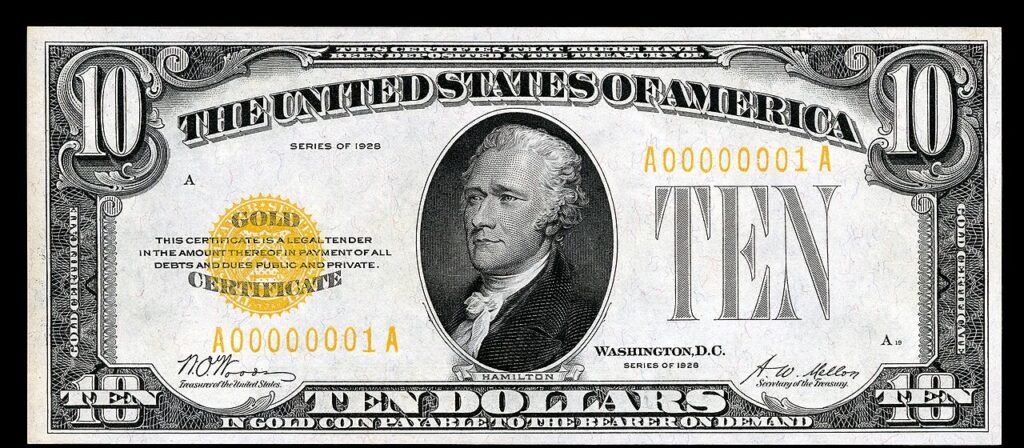
The Division of Investigation printed booklets listing every ransom serial number and sent them to banks.
Then, in 1933, the government ordered Americans to turn in their gold certificates by May 1. After that date, anyone still spending them stood out.
A few days before the deadline, a man exchanged almost $3,000 of the ransom money at a Manhattan bank. He gave the name J. J. Faulkner and an address where no one by that name lived. After that, single ransom bills kept surfacing, a few at a time, in New York.
Investigators noticed a pattern. The bills were being spent along the Lexington Avenue subway line, between the Bronx and the German neighborhood of Yorkville on Manhattan’s Upper East Side.
But nobody ever got a look at who was spending them. For two and a half years, “John” stayed a ghost.
Ninety-eight cents of gas
In September 1934, a dark blue sedan pulled into a gas station in upper Manhattan. The driver bought five gallons of gas. It came to 98 cents.
He paid with a $10 gold certificate.
Gold certificates were rare by then, and gas stations had been warned to watch out for counterfeits. According to accounts of the exchange, the attendant remarked that you didn’t see many of those anymore.
“No,” the driver answered. “I have only about one hundred left.”
The attendant took the bill. Then, just in case, he penciled the car’s New York license plate number in the margin: 4U-13-41.
On September 18, 1934, the bill reached a bank in Manhattan. A teller checked its serial number against the list. It was Lindbergh ransom money.
Investigators traced the license plate. It belonged to a 34-year-old German carpenter who lived in the Bronx: Bruno Richard Hauptmann.
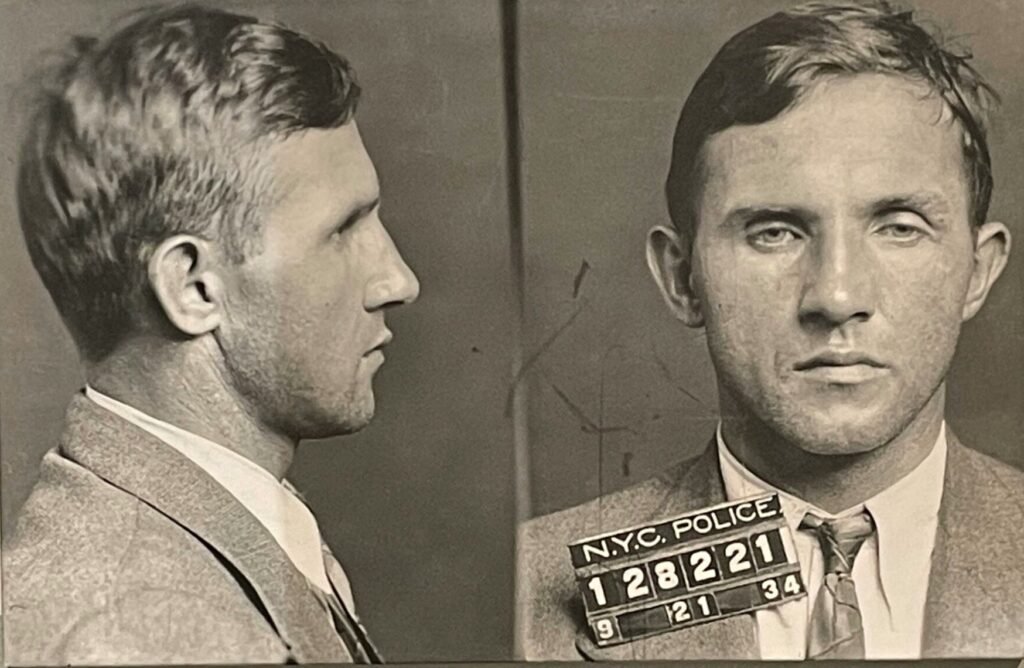
He had entered the country illegally years earlier as a stowaway, after a criminal record in Germany. He had a wife, Anna, and a baby son. His neighbors had noticed that he had stopped working as a carpenter in 1932, the year of the ransom. He told them he was making money on Wall Street.
On the morning of September 19, 1934, detectives watched him back his car out of the garage behind his house at 1279 East 222nd Street. They followed him and stopped him in the Bronx.
In his wallet was a $20 gold certificate. It was ransom money too.
Hauptmann said he knew nothing about the Lindbergh baby. Then the detectives went back to his house and started taking his garage apart.
Continue readingPage 2 of 2