Reader discretion: this story contains details of violence some readers may find distressing.
At 5:15 on a Monday morning in July 2021, the phones started ringing at the Macon-Bibb County 911 center.
A neighbour on Karen Drive, in east Macon, had heard arguing coming from the house across the street, then gunshots. Minutes later a second call came in from the same block: a child was screaming.
By the time the first deputy pulled up, a black Ford F-150 was already reversing out of the driveway. The man behind the wheel was shirtless, in shorts. He leaned out and told the deputy to follow him to the hospital. Then he sped away.
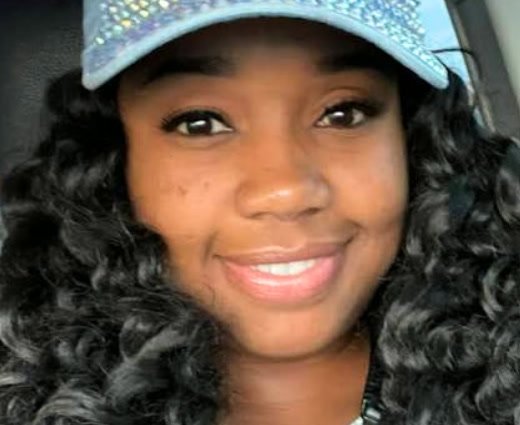
Inside the truck was 38-year-old Tanesha Danielle Thomas, bleeding from a gunshot wound to her lower right abdomen. In the back seat was her seven-year-old daughter.
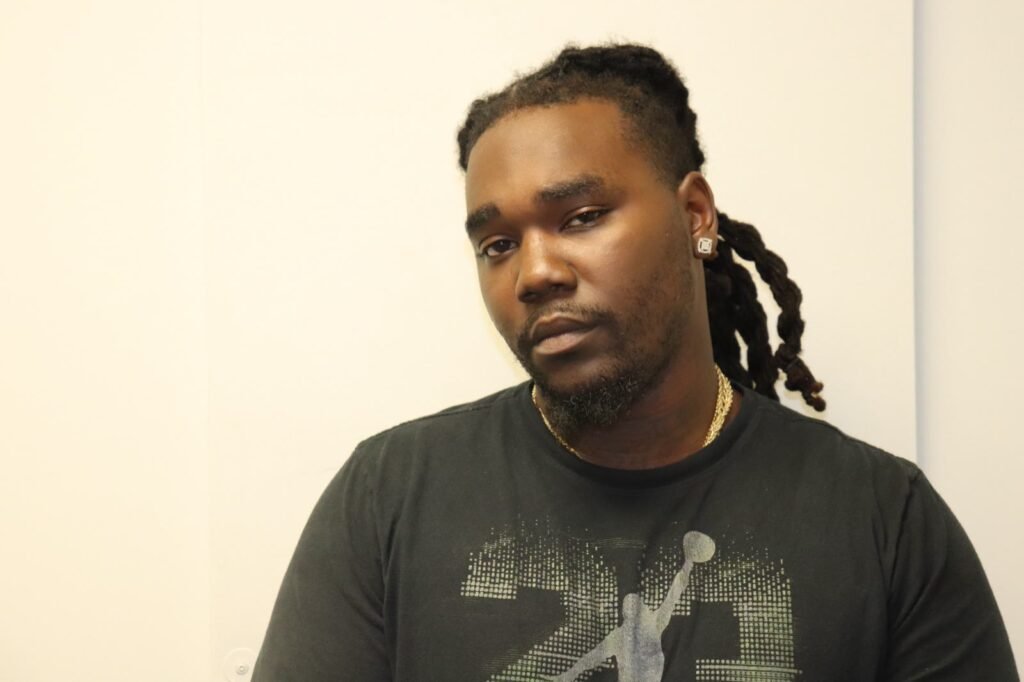
The driver was Leonard Dewayne Holmes, 30, Tanesha’s long-time boyfriend. Over the next four hours he would tell deputies a story, run from them half-dressed through the streets of east Macon, and finally give detectives an account that matched almost none of what he had said at the hospital.
The records from that morning, including body camera footage and the sheriff’s crime lab files, were obtained by Wicked Crime directly from law enforcement.
An empty house and a trail of shell casings
The deputy who had been waved off in the driveway made a decision: she stayed. Nobody yet knew whether there was another victim inside.
She went in. The only living thing in the house was the family dog, shut in a makeshift kennel in the living room. There was blood in a room next to the screened-in side porch, and a large amount of blood on the porch itself. Outside, near the carport, she spotted three shell casings.
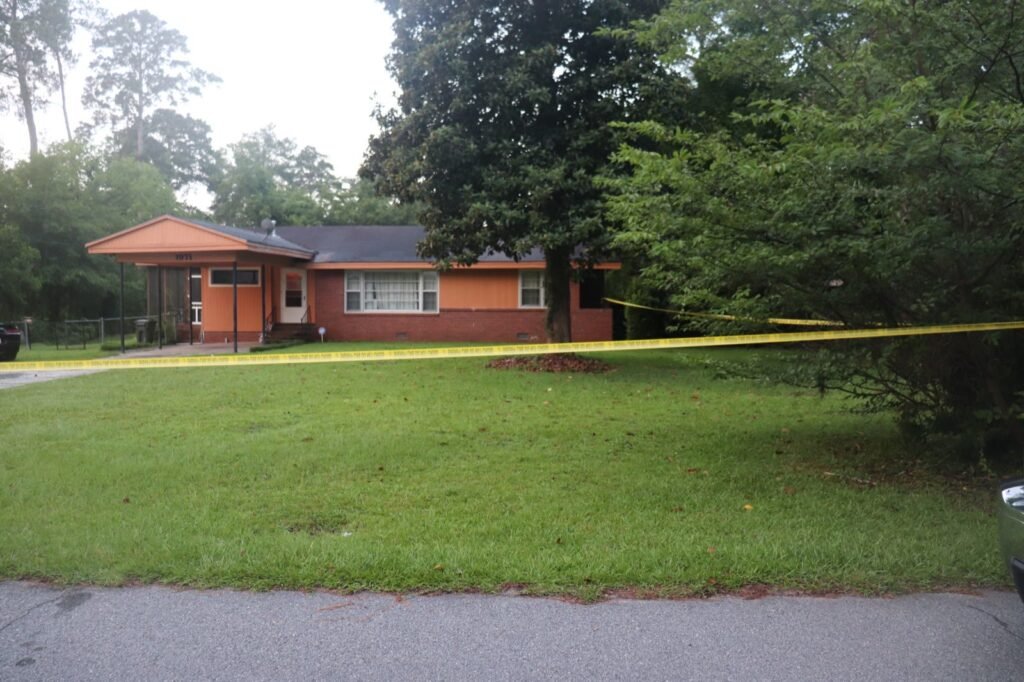
Across the street, a couple told her what they had heard. The wife had been woken by arguing and what sounded like the child screaming, then at least two shots. Her husband said he had looked out and seen Holmes in the front yard, firing into the air.
“It was a drive-by”
At 5:26 a.m. a deputy radioed from the emergency entrance of Coliseum Medical Center. The black F-150 had arrived. Holmes climbed out wearing only a pair of red boxers. Tanesha was helped from the truck by medical staff and rushed inside.
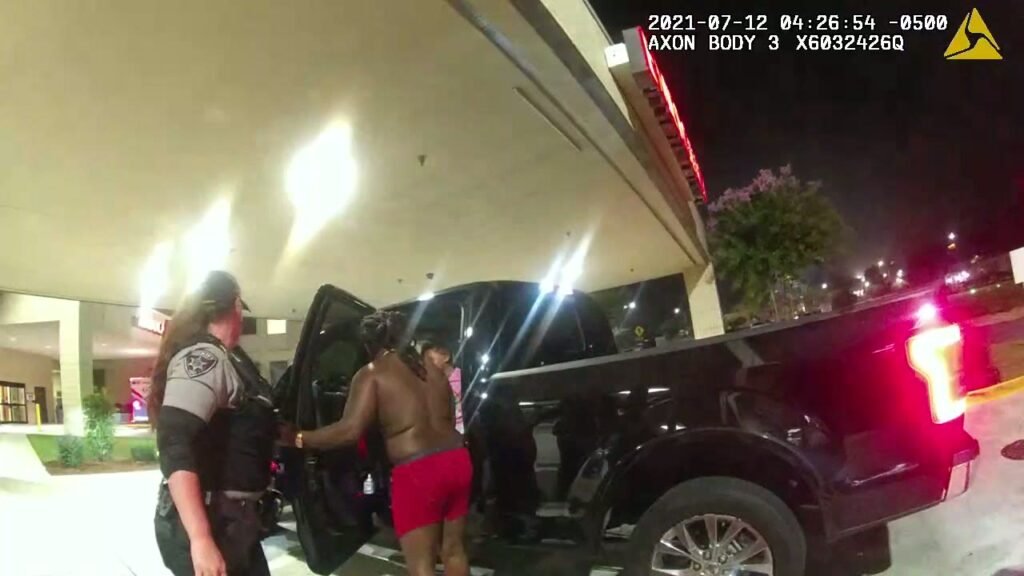
Deputies asked Holmes what had happened. He had an answer ready. He and his “wife”, he said, had gone out onto the porch to smoke a cigarette and talk when an unknown car drove past and started shooting. They ran inside, and that was when she told him she had been hit.
Who would shoot at them? He didn’t know. A suspect? A reason? He couldn’t give one.
The deputy noted something else: he smelled strongly of alcohol.
Inside, doctors told deputies Tanesha was in critical condition. She was being moved to Atrium Health Navicent for emergency surgery.
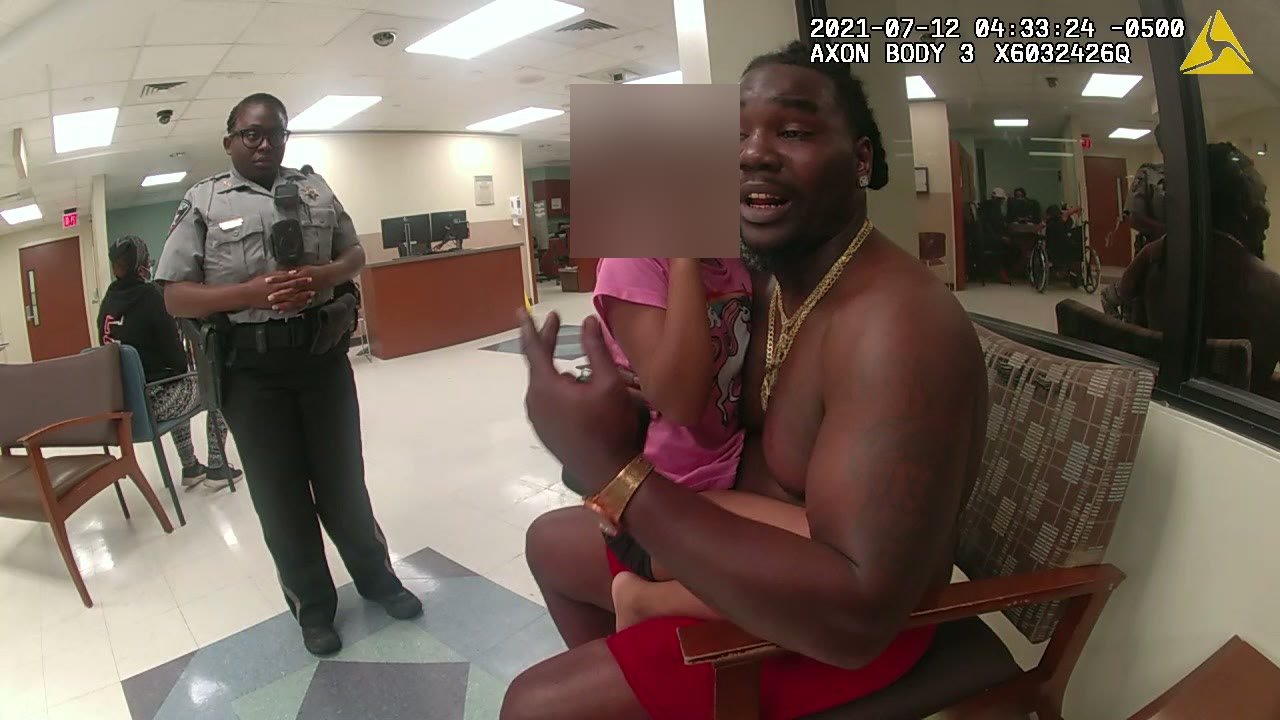
In the lobby, Holmes sat with the little girl in his lap. Outside, as the sun came up, he paced the parking lot while relatives arrived. When a deputy asked him to sit down, he snapped back: “Would you stop pacing if your wife or girlfriend got shot?”
The evidence did not show a drive-by
While Holmes was telling his story at the hospital, the sheriff’s crime lab was taking the house on Karen Drive apart.
If someone had driven past and opened fire, there should have been bullet holes. Sgt. Robert Shockley, the lead investigator, walked the outside of the house looking for them. He found none: no strikes on the walls, no holes in the porch screen.
What he did find were shell casings, lots of them.
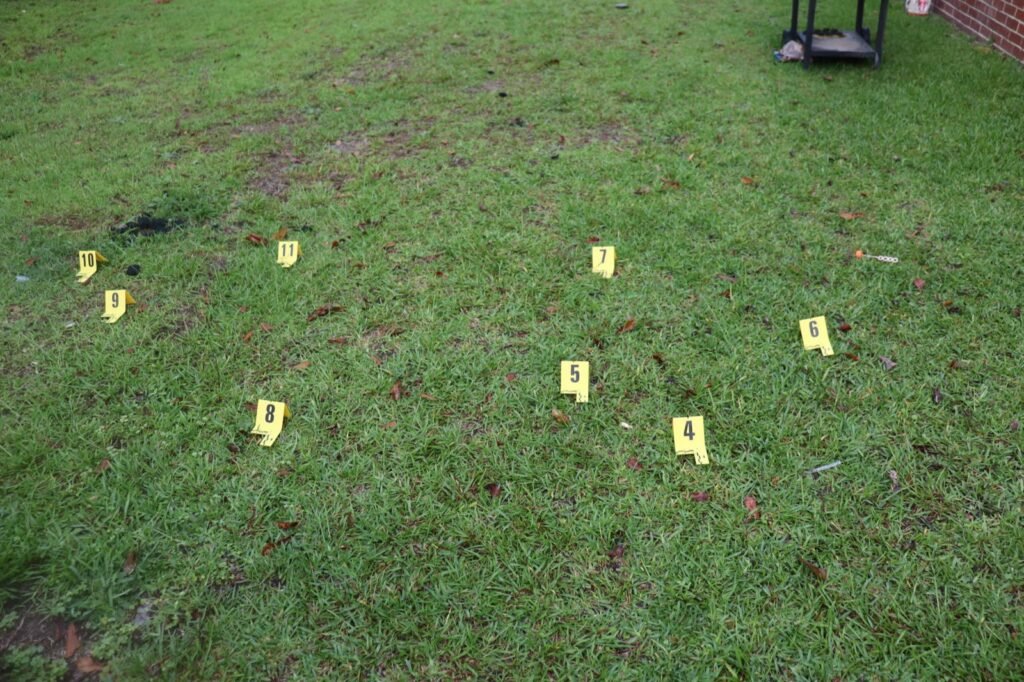
Three spent .40 caliber casings lay in the front yard and driveway. Eight more were scattered in the side yard, just inside the double gate. That made eleven rounds fired outside the house, all from a .40.
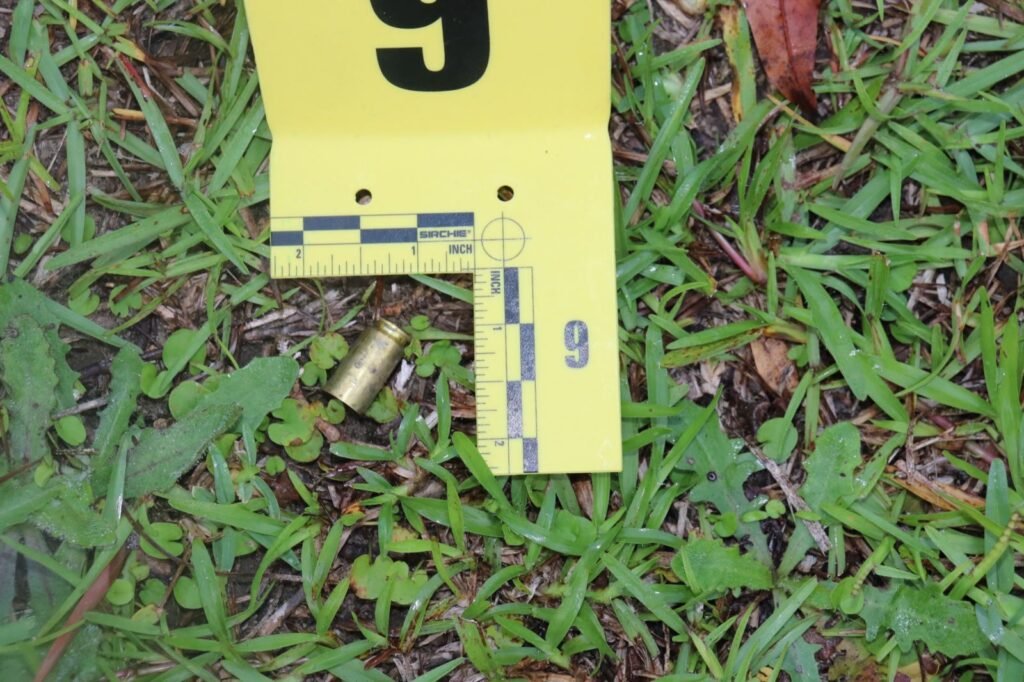
On the side porch, where Tanesha’s blood was pooled, there was a different kind of casing: a single spent 9mm.
Then investigators went inside with a search warrant.
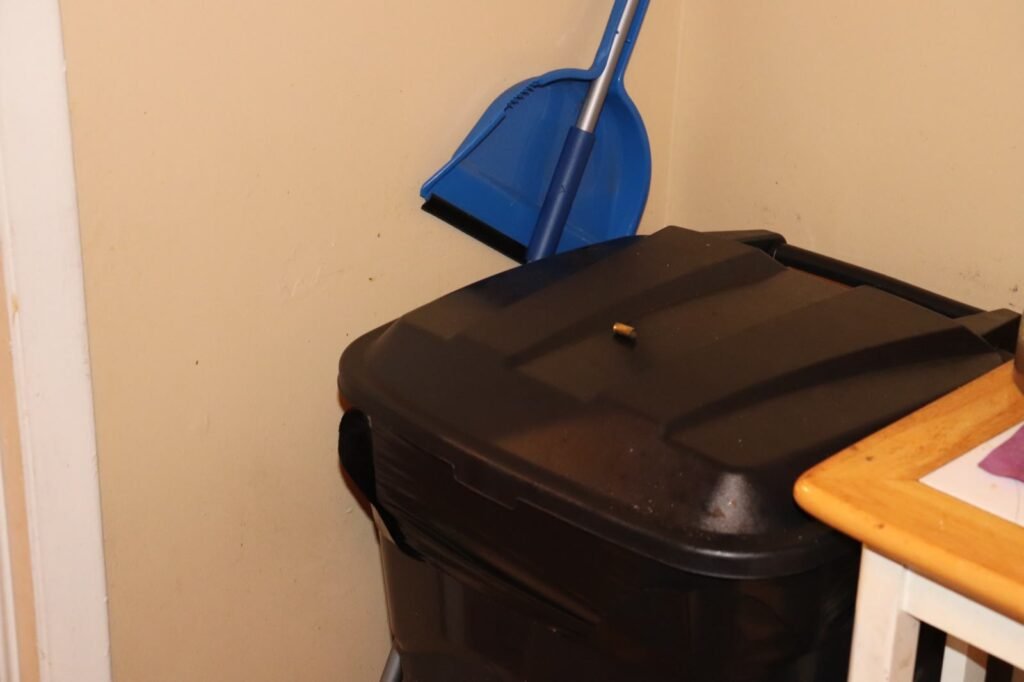
On the lid of the kitchen trash can sat a second spent 9mm casing. In the kitchen floor, leading toward the dining room, was a hole made by a bullet that had gone into the floor at roughly a 45-degree angle.
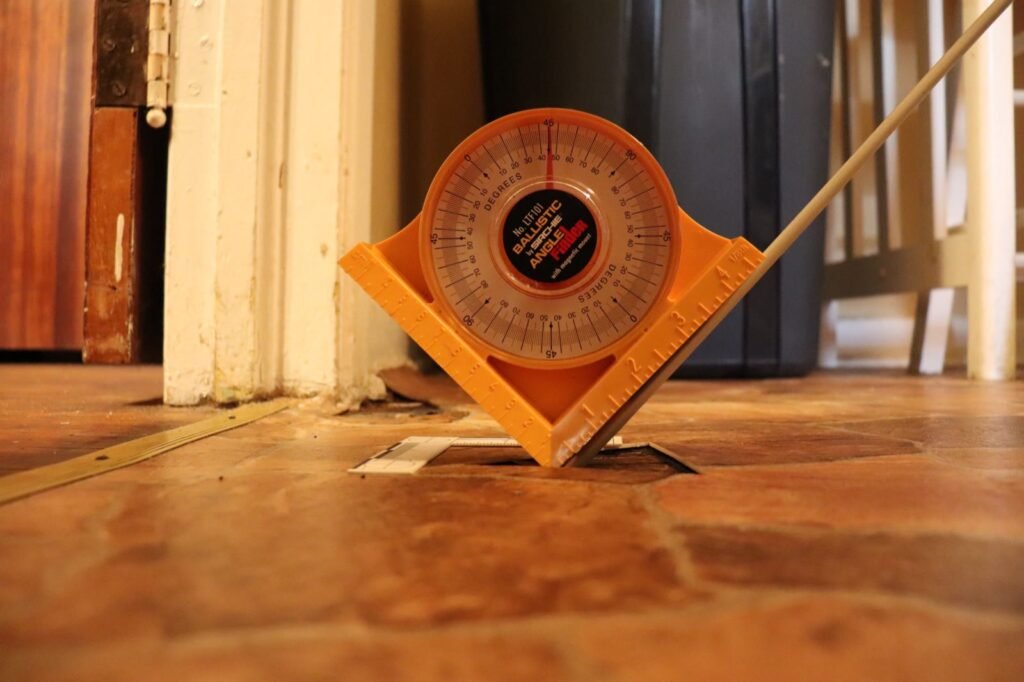
Inside the side door that led out to the porch, the floor was covered in a large blood stain that had been smeared, the crime lab wrote, consistent with a person lying on the floor in heavily bloodstained clothing.
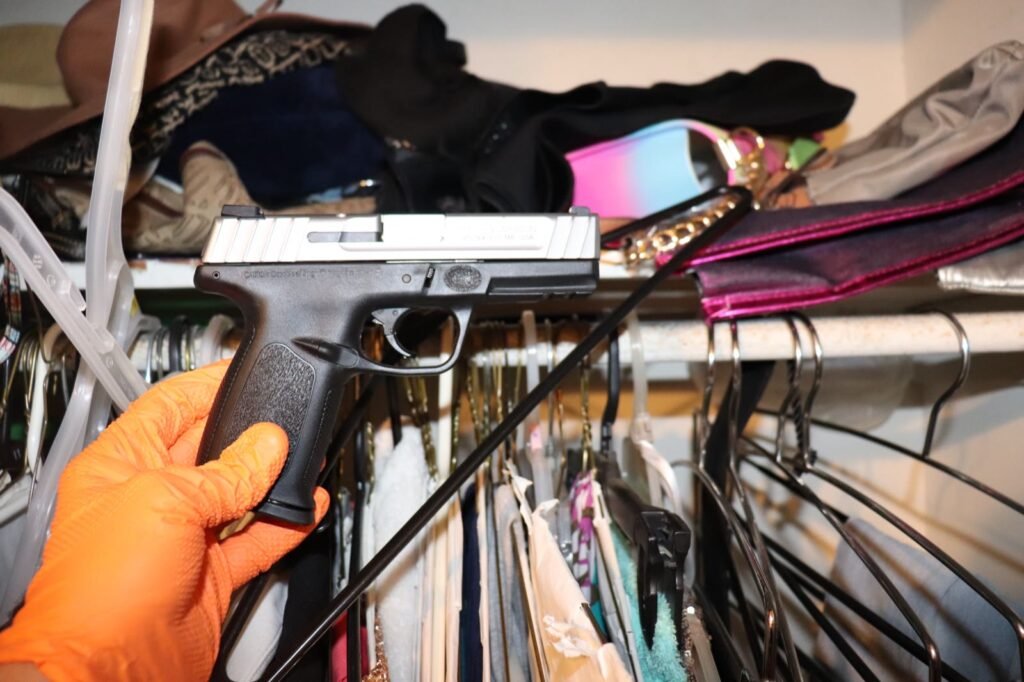
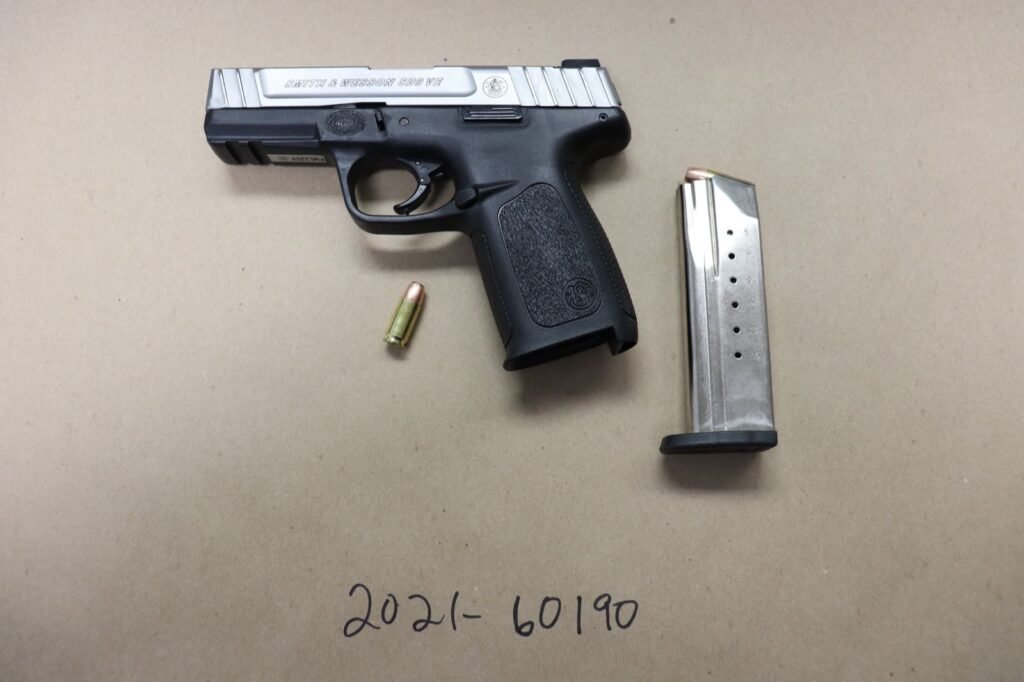
And in the front bedroom, on the top shelf of the closet, sat a black and silver Smith & Wesson 9mm pistol. It was loaded: nine rounds in the magazine, one in the chamber.
He ran
Back at the hospital, Shockley had heard enough. Holmes was telling deputies he was leaving and that they couldn’t hold him there. Shockley told them to detain him until he arrived.
At about 6:41 a.m., a corporal stepped behind Holmes to put him in handcuffs.
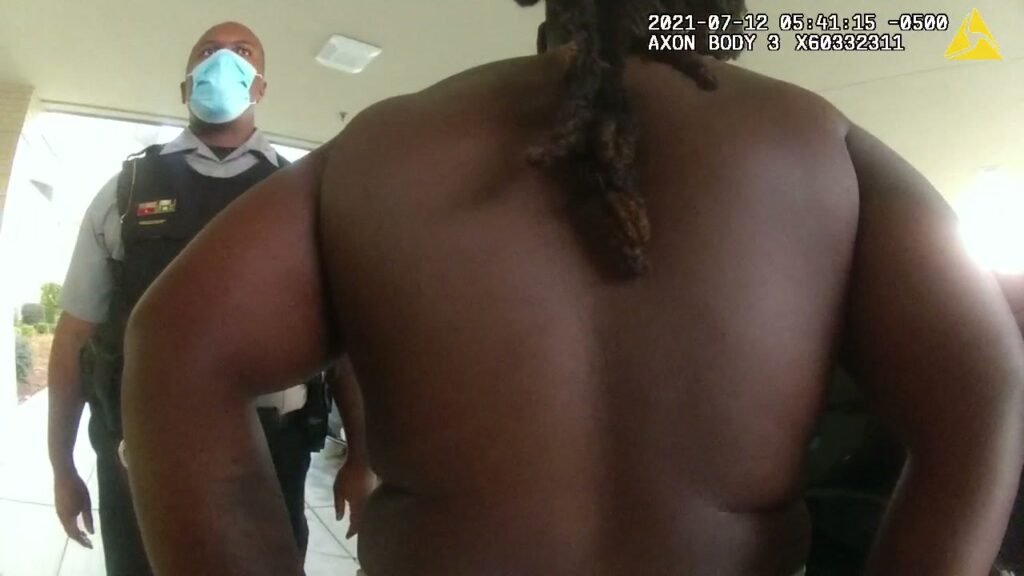
“As soon as I go to click one, he took off,” the corporal told a colleague minutes later. “Ran right past Fields.”
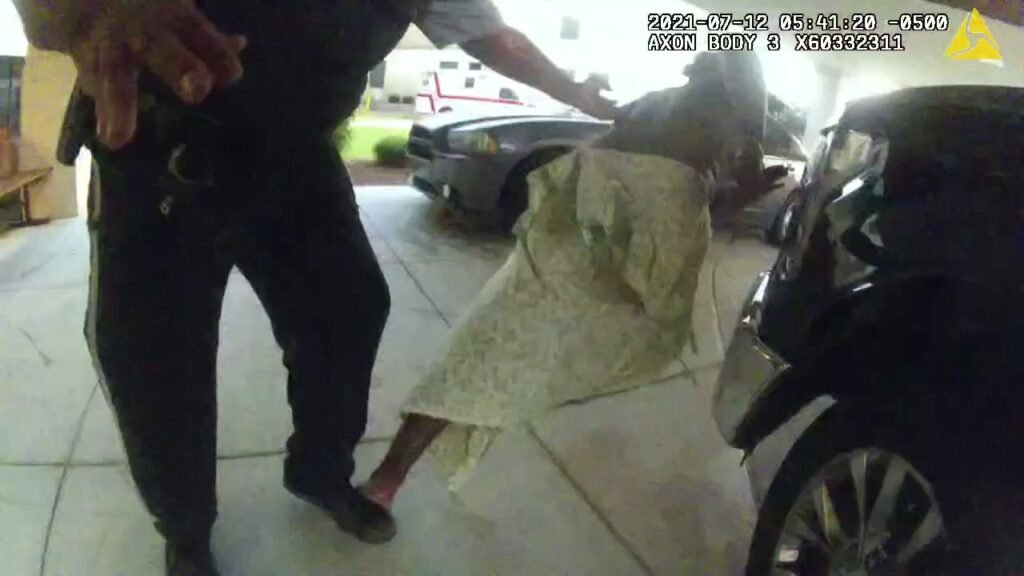
Holmes sprinted across the hospital parking lot in a hospital gown and red boxers, barefoot. Deputy Fields fired his Taser. It missed. Holmes scaled a fence and disappeared into the woods behind a church.
His phone was left behind at the truck.
For more than two hours, deputies searched east Macon on foot. A caller reported a man in red shorts behind a house on Woolfolk Street. When a deputy arrived, Holmes saw him first, climbed another fence and was gone again.
The break came from a grandmother. A deputy standing on a street corner overheard a woman say her grandmother had just called: there was a man with dreads inside her house on Womack Street, trying to use her phone.
Deputies surrounded the house. Two of them went in through the front door and found Holmes in the kitchen, crouched down by the side door.
The second story
In an interview room, Holmes was read his rights and said he wanted a lawyer. The interview ended.
Then the news came from the hospital. Tanesha Thomas had died.
Shockley went back in and told him. Later, Holmes asked to talk.
This time his account was very different. He said he and Tanesha hadn’t spoken in about two days. He had come home from the club and noticed text messages on her phone, though he insisted he wasn’t worried about them. They started arguing. As the argument moved through the house, he said, Tanesha headed for the bedroom, and he thought she was going to get her gun.
He said she came back with her 9mm, pointed it at him and backed toward the kitchen as he followed. In the kitchen, he claimed, she fired a shot at him, and for a moment he thought he had been hit. He said her daughter, now awake, told her mother not to shoot him.
He said he went out through the porch screen door to his car, took out his own handgun and fired shots into the air. Then he heard another shot, and heard Tanesha say she had been shot.
He went back into the house, he said, and found her. Then he picked up her gun, carried it to the bedroom and put it back on the closet shelf. Only after that did he carry Tanesha to her truck, put her daughter in the back seat and drive to the hospital.
He admitted the drive-by had been a lie. He said he ran from deputies because they were trying to handcuff him.
What the little girl said
Afterwards, Tanesha’s daughter was taken with her father to The Crescent House, a child advocacy center in Macon, to be interviewed.
She told the interviewer she had woken up to her mother and “Heavy”, her name for Holmes, arguing. She said she had heard them argue like that before. They moved through the house and she followed them. When they got to the porch, she said, Heavy went to his car and started shooting. She got scared and ran off the porch into the back yard.
Over and over during the interview, she said the same four words: “He killed my mama.”
The interview had to be stopped because of how upset she was.
What the evidence showed
Holmes was first booked on two counts of possession of a firearm by a convicted felon. Because of his prior felony convictions, he wasn’t allowed to have a gun at all. Warrants for murder followed, along with a marijuana charge after investigators found about 18 ounces of suspected marijuana, a digital scale and packaging in a backpack in the trunk of his Chevrolet Camaro, parked in the front yard.
The state crime lab’s autopsy found that a single bullet had entered Tanesha’s lower right abdomen and travelled front to back and slightly upward. Surgeons had operated, but she died of the wound. The medical examiner ruled her death a homicide.
Months later, the sheriff’s ballistics team entered the casings into the national ballistics database, NIBIN. It flagged a potential link between the 9mm casing from the porch where Tanesha was shot and test fires from the Smith & Wesson pistol Holmes admitted carrying back to the closet shelf. Under NIBIN rules, a lead like this has to be confirmed by a microscopic comparison before it can be used in court.
In 2025, nearly four years after the shooting, a sheriff’s forensic examiner tried to get into a Samsung phone collected as evidence in the case. It was locked with a six-digit passcode. A brute-force attempt ran out without cracking it.
Where he is now
Leonard Holmes was charged with murder. He was ultimately convicted of voluntary manslaughter, aggravated assault and possession of a firearm during the commission of a crime, according to Georgia Department of Corrections records.
He received 20 years for the manslaughter. He is being held at Dodge State Prison, and his maximum release date is in July 2041, when the little girl from the back seat will be in her late twenties.